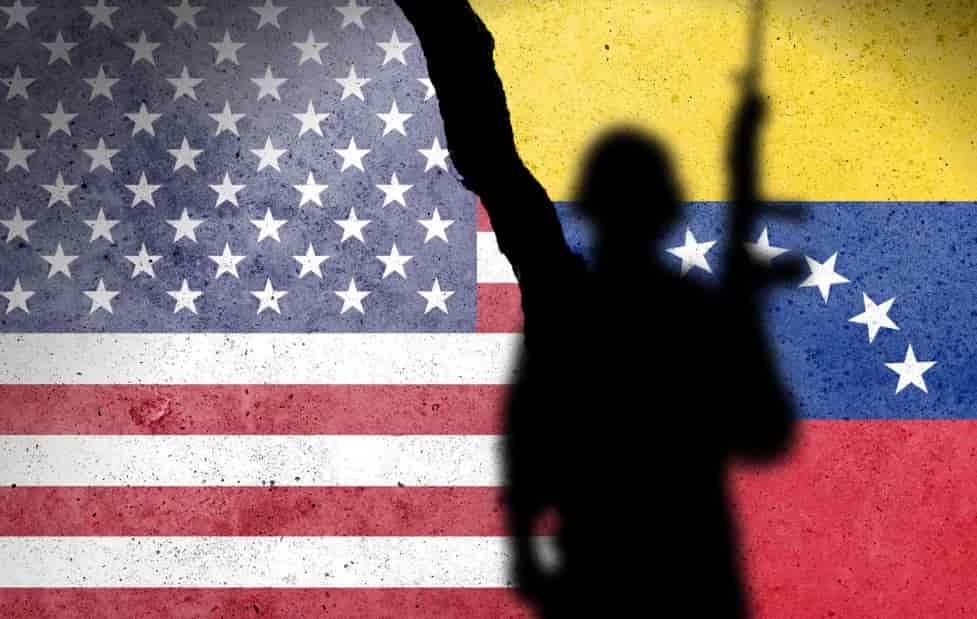
The United States’ bold military operation in Venezuela in early 2026 is reshaping global geopolitics from Latin America to the Taiwan Strait and the Middle East. On January 3, 2026, U.S. forces carried out a major strike in Caracas that resulted in the capture of Venezuelan President Nicolás Maduro and his wife Cilia Flores, who were flown to the United States to face federal charges.
This dramatic action under President Donald Trump, framed as a counter-narcotics and security mission, has become the centerpiece of U.S. foreign policy in 2026, affecting positions on Iraq, Taiwan, and strategic competition with China and Russia.
Venezuela: A Strategic Flashpoint
The operation, dubbed Operation Absolute Resolve, saw U.S. military forces strike key targets and detain Maduro, prompting interim president Delcy Rodríguez to assume Venezuela’s leadership under domestic constitutional mechanisms.
The U.S. government justified the raid as part of a broader effort to confront drug trafficking and restore democratic norms. However, international reactions were sharply divided. Many nations and experts criticized the mission as a blatant violation of sovereignty and international law—including condemnations from China and Russia, who labeled the action as hegemonic and unlawful.
In Latin America, the destabilizing effects were immediate: Venezuela declared national mourning for military and Cuban personnel killed during the operation, and regional governments expressed deep concern about U.S. military interventionism.
Impact on United States China Relations
The U.S. operation in Venezuela has direct implications for U.S. China strategic rivalry. Analysts argue that the dramatic strike gives Beijing fodder to criticize U.S. foreign policy, potentially strengthening China’s position on territorial issues such as Taiwan and in the South China Sea.
While China condemned the Venezuela raid as a breach of international norms, Beijing is also likely to use the situation to rally support among nations wary of U.S. unilateralism. These dynamics add complexity to Washington’s ongoing deterrence strategy toward China over Taiwan, where the U.S. continues security partnerships such as AUKUS and extended deterrence commitments, emphasizing stability in the Indo-Pacific.
U.S. Position on Iraq and Broader Security Goals
In the Middle East, U.S. policy remains framed around regional stability and countering influences from Moscow and Beijing. Though unrelated directly to the Venezuela operation, Washington’s efforts in Iraq seek to balance Russian and Iranian sway while maintaining partnerships with local governments. Russia has criticized American actions as precedent for aggressive interventions, potentially influencing its own strategic calculations in the region. China, meanwhile, uses economic ties in Iraq to expand influence without direct military confrontation.
Broader Geopolitical Repercussions
The Venezuela operation has become a litmus test for U.S. power projection, signaling a shift toward assertive military engagement beyond traditional theaters. Critics argue that this risks isolating the United States on the world stage and emboldening rivals to exploit perceived overreach. Supporters counter that decisive action deters adversaries and affirms U.S. commitment to combating transnational threats.
The U.S. intervention in Venezuela is more than a regional event it is a geopolitical signal. By aggressively asserting power in Latin America, Washington aims to influence global narratives on security, sovereignty, and competition with China and Russia. As fallout continues, the world watches how these actions reshape U.S. diplomacy and strategic priorities across continents in 2026 and beyond.