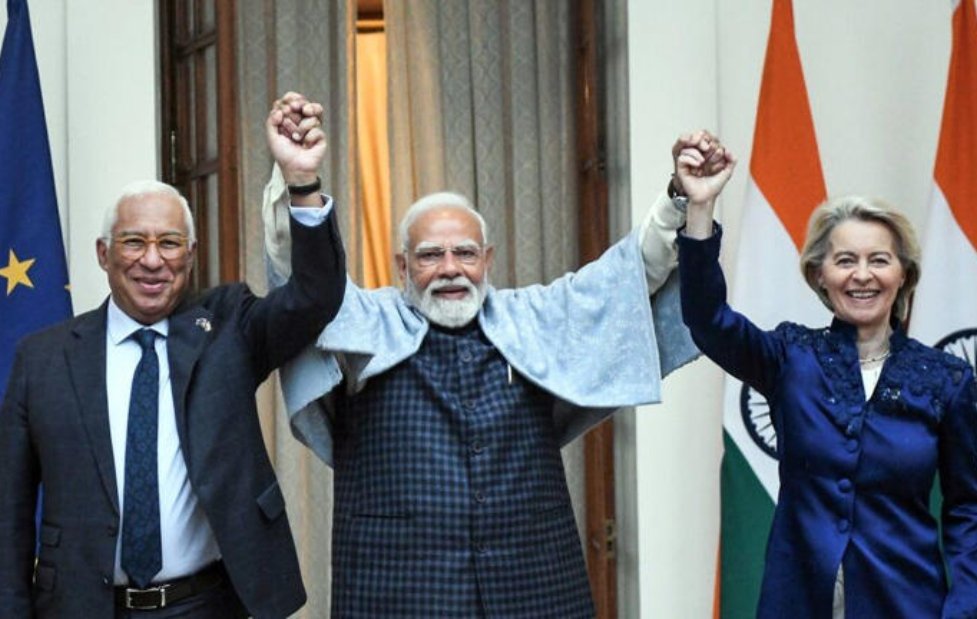
The newly concluded India European Union free trade agreement has emerged as one of the most significant global economic developments in recent years. Described by leaders as the mother of all trade deals, the agreement has been welcomed enthusiastically in many circles while drawing sharp criticism from the United States.
After nearly twenty years of negotiations, India and the European Union reached consensus on a broad framework designed to reduce tariffs and improve market access. The agreement covers goods, services, manufacturing standards and regulatory cooperation, aiming to strengthen economic ties between two of the world’s largest markets.
Supporters believe the deal could reshape global trade patterns. Several Indian sectors including textiles, engineering goods, pharmaceuticals, leather and seafood are expected to benefit from easier entry into European markets. European companies, in turn, may gain expanded access to India’s rapidly growing consumer base.
Together, India and the EU represent close to two billion consumers, making the agreement one of the most expansive trade partnerships ever negotiated. Proponents say the pact can boost exports, attract investment and create employment opportunities across multiple industries.
However, the agreement has also attracted criticism from Washington. Senior US officials expressed concern that Europe’s growing trade engagement with India could indirectly enable continued energy purchases connected to Russia, especially amid the ongoing conflict in Ukraine. According to their view, such arrangements could weaken unified economic pressure strategies.
These remarks highlight how modern trade agreements are no longer purely economic in nature. Geopolitics, energy security and global alliances now play a central role in shaping trade policy decisions.
The India EU deal also arrives at a time when many nations are reconsidering dependency on single markets. With rising tariffs and protectionist trends in parts of the world, countries are actively seeking diversified partnerships to safeguard supply chains.
Supporters argue the agreement represents a shift toward a multipolar global economy where cooperation extends beyond traditional power centres. They see it as a sign of India’s growing influence in global commerce.
The deal must still pass formal ratification processes before implementation. If approved, it could redefine international trade cooperation and mark a major milestone in the evolving global economic order.