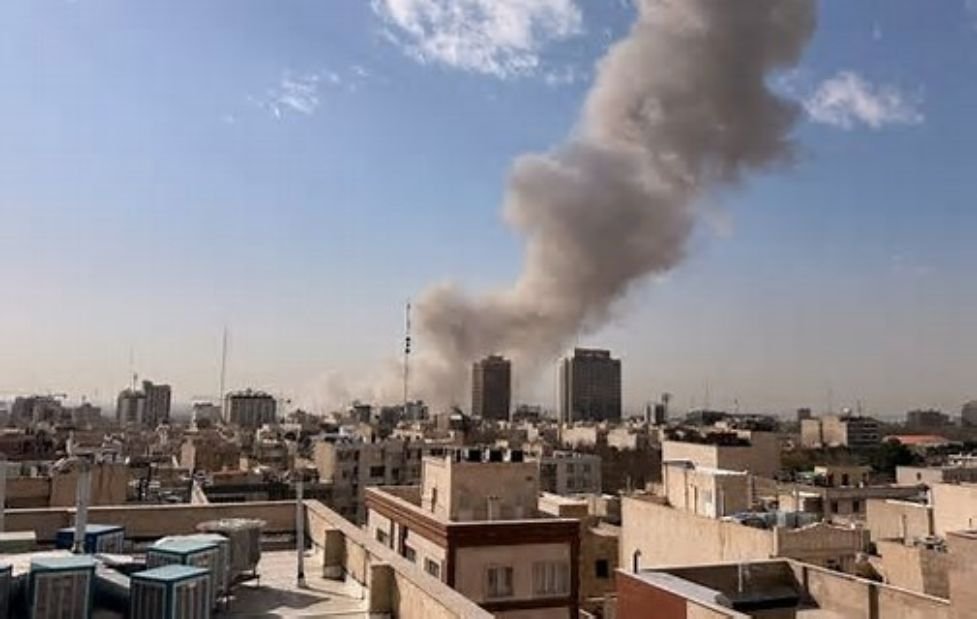
As Iran descends into its most severe internal crisis in decades, the fallout is being felt far beyond its borders most notably in New Delhi. Widespread protests, violent crackdowns, and fears of regime instability in Tehran now threaten to upend India’s strategic, economic, and geopolitical interests in West and Central Asia, built painstakingly over decades.
At the center of India’s anxiety lies Chabahar Port, a project once envisioned as a cornerstone of India’s regional outreach but now at risk of becoming a geopolitical liability.
The Chabahar Port Crisis: India’s Strategic Gateway at Risk
India has invested nearly $500 million in developing Iran’s Chabahar Port, designed to bypass Pakistan and provide direct access to Afghanistan, Central Asia, Russia, and Europe. Chabahar is also critical to the International North-South Transport Corridor (INSTC) a 7,200-km multimodal trade route that reduces transit time by 40% and costs by nearly 30%.
However, this strategic architecture depends on political stability in Iran, which is rapidly eroding.
Indian officials privately acknowledge that while protesters are unlikely to target Chabahar directly, project continuity is the real danger. The key Chabahar Zahedan railway, vital for linking the port to Iran’s rail network, faces delays due to internet blackouts, supply chain disruptions, and administrative paralysis.
In a worst-case scenario involving regime collapse or state fragmentation, Chabahar could become a contested asset effectively stripping India of its only viable land bridge to Central Asia and reversing decades of strategic planning.
Energy Security and Economic Fallout
Although India stopped importing Iranian oil in 2019 due to U.S. sanctions, the broader region still supplies nearly 60% of India’s crude oil and gas. Any instability threatening the Strait of Hormuz, through which about 20% of global oil flows, would send energy prices soaring.
For India, this would mean:
- Higher import bills
- Inflationary pressure
- Increased costs for manufacturing and transport
The crisis has already disrupted trade. Nearly ₹2,000 crore worth of Indian basmati rice exports are stuck due to Iran’s currency collapse. Total India–Iran trade stood at $1.68 billion in FY 2024–25, a figure that could shrink rapidly amid Iran’s economic freefall.
Geopolitical Fallout: China and Pakistan Stand to Gain
Beyond economics, Iran plays a crucial strategic balancing role for India. Historically, Tehran countered Pakistan-backed Sunni extremist groups and opposed Taliban dominance in Afghanistan aligning indirectly with Indian interests.
A weakened or fractured Iran could:
- Expand Pakistan’s influence in Afghanistan
- Reduce resistance to China’s regional ambitions
- Undermine India’s maritime posture in the Arabian Sea
China already has deep ties with Iran under the Belt and Road Initiative and could move quickly to dominate Chabahar or sideline India’s role especially as Beijing strengthens its naval presence in the Indian Ocean. Chabahar’s proximity to Pakistan’s Gwadar Port (just 170 km away) adds to its strategic sensitivity.
Human and Regional Risks for India
Iran’s instability also poses risks to:
- Indian workers and contractors in Chabahar
- Nearly 9 million Indian expatriates across the Gulf
The Gulf region sends over $80 billion annually in remittances to India. Any escalation into proxy wars or regional conflict could disrupt these lifelines and force large-scale evacuations.
This comes as India already navigates political instability in neighboring regions and uncertainty in global geopolitics.
India’s Limited Diplomatic Options
India faces a stark dilemma:
- Supporting regime change risks alienating future Iranian governments
- Supporting the status quo contradicts India’s democratic values
- Remaining neutral risks strategic erosion
U.S. threats of military intervention could accelerate Iran’s collapse but would likely trigger chaos, benefiting China and Pakistan, not India.
Preparing for Multiple Scenarios
New Delhi must plan for:
- Weakened regime survival – quietly support stability and protect projects
- Managed transition – build ties with emerging political actors
- Chaotic fragmentation – secure investments, evacuate personnel, and explore alternate trade routes
Simultaneously, India must accelerate:
- Energy diversification
- Strategic petroleum reserves
- Renewable energy transition
- Stronger ties with Central Asia and Gulf states
The Strategic Reality
The uncomfortable truth is that India’s interests currently align more with stability in Iran than with political transformation. Chabahar, energy security, regional balance, and access to Eurasia all depend on a functioning Iranian state.
Iran’s crisis is no longer a distant foreign issue it is a strategic stress test for India’s ambitions beyond South Asia. Whether New Delhi can navigate this geopolitical minefield will determine not just the fate of Chabahar, but India’s credibility as a regional power in an increasingly unstable world.