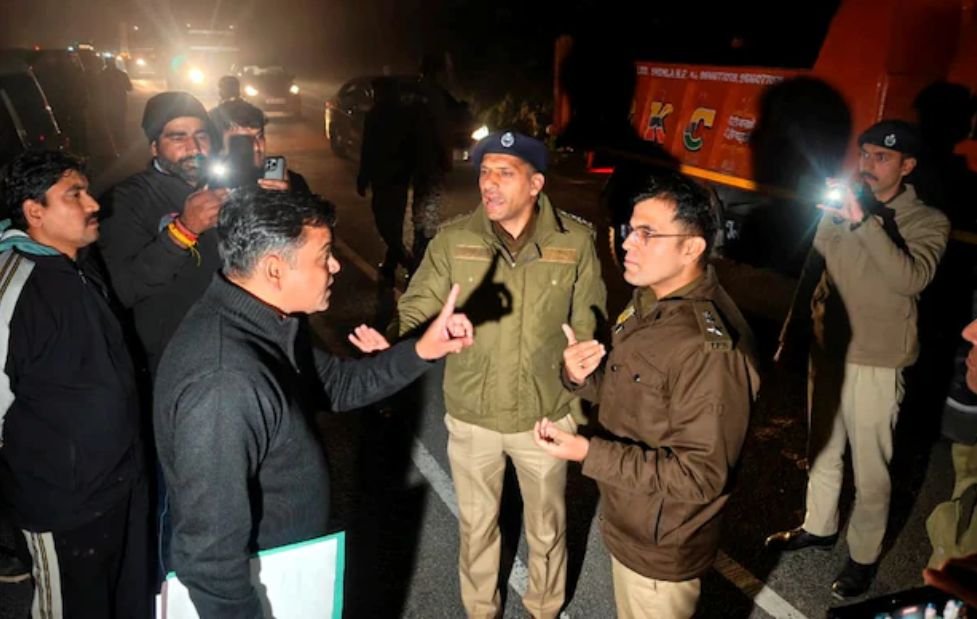
A late-night standoff between law enforcement agencies in northern India has drawn national attention after the arrest of Youth Congress activists linked to protests at a high-profile artificial intelligence summit. The incident, which involved officers from Delhi traveling to Himachal Pradesh to detain suspects, escalated into a jurisdictional dispute between the two police forces. The controversy comes at a time when India is positioning itself as a global technology hub, making the episode politically and diplomatically significant beyond a routine law-and-order matter.
What the Decision Means- The developments highlight the increasing intersection between political activism and high-visibility international events hosted in India. Technology summits, especially those involving foreign investors and corporate leaders, are designed to showcase stability, innovation, and governance capacity. Disruptions — even symbolic protests — risk shifting attention away from economic messaging toward domestic political conflict.
For businesses and industry stakeholders, the episode underscores operational risks associated with large-scale events. Organizers may face pressure to strengthen security protocols, while state authorities could impose stricter compliance requirements for participants and visitors. Such measures may increase costs but also enhance confidence among international delegates.
The dispute between two state police forces also raises practical concerns regarding inter-state law enforcement coordination in India’s federal system. Companies operating across multiple states depend on predictable enforcement practices, and incidents like this can create uncertainty about procedural consistency.
The Legal/Political Angle- At the core of the controversy lies the legality of arrests conducted outside a police force’s home jurisdiction. Reports indicate that Delhi Police officers detained activists in Himachal Pradesh, prompting local authorities to file complaints alleging procedural violations, including lack of proper coordination. Cross-cases between police agencies are rare and typically reflect deeper political tensions.
The situation is further complicated by the political affiliations of the detained individuals, who are associated with a major opposition party’s youth wing. Protests at government-linked events often carry constitutional implications related to freedom of expression and lawful assembly. Courts may ultimately determine whether due process was followed and whether the arrests were justified under existing criminal statutes.
The case also reflects broader political rivalry between parties governing different states, which can influence administrative cooperation. Such dynamics are not unique to India but become particularly sensitive when they involve national-level events.
Impact on Bilateral/Global Relations- Although primarily domestic, the incident has indirect international implications. The AI summit itself involved global participants, investors, and policymakers, making any controversy around it visible beyond India’s borders. For foreign governments and companies evaluating partnerships in India’s technology sector, political stability and administrative efficiency are key considerations.
However, experts note that isolated protests rarely alter long-term bilateral relations. India’s technology partnerships are driven more by market size, talent availability, and strategic alignment than by short-term political incidents. Nonetheless, repeated disruptions could influence perceptions about event security and regulatory predictability.
Market and Investor Reactions- Financial markets typically respond more to structural economic policies than to isolated political events, and there has been no immediate evidence of major investor concern linked directly to the incident. Still, investor sentiment toward emerging technology ecosystems depends partly on governance credibility.
For sectors such as event management, security services, and infrastructure providers, the episode may lead to increased demand for risk management solutions. Technology firms participating in government-backed initiatives could also seek clearer assurances regarding operational continuity during politically sensitive events.
In the long term, India’s AI sector outlook remains strong due to policy incentives, digital adoption, and venture capital inflows. Market participants are unlikely to view the dispute as a structural risk unless similar conflicts become frequent.
The Bottom Line- The police confrontation following the AI summit protest illustrates how political activism, federal governance complexities, and global economic ambitions can intersect in unexpected ways. While the legal process will determine accountability, the broader lesson lies in the need for clearer inter-state coordination and robust event security frameworks.
As India continues to host high-profile international gatherings to attract investment and technological collaboration, ensuring administrative cohesion will be essential. The outcome of this episode, particularly judicial interpretations and institutional responses may influence how future national events are managed, both politically and operationally.

.png)