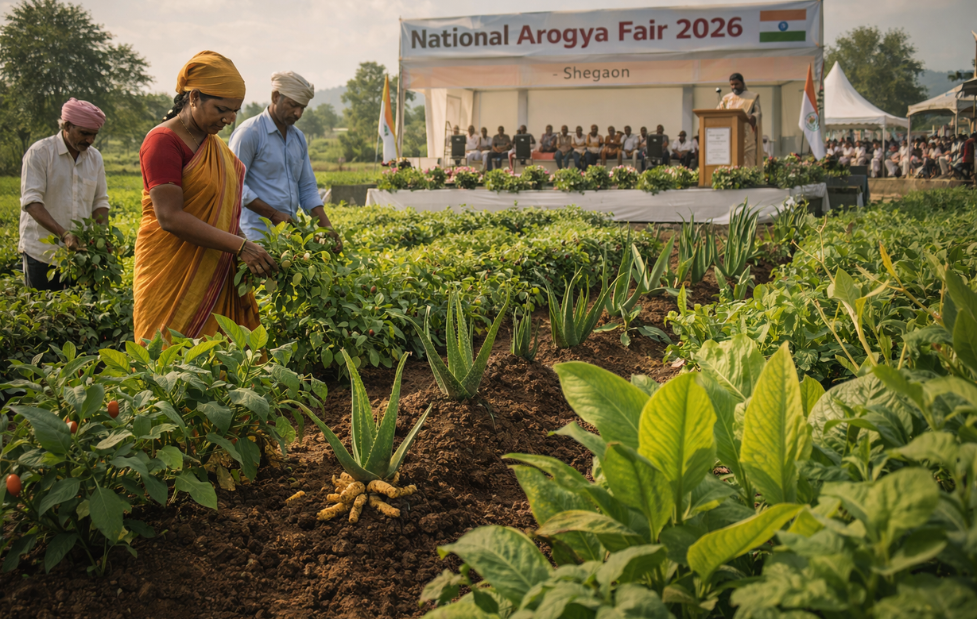
President Droupadi Murmu recently highlighted the strong potential of medicinal plant cultivation to improve farmers’ income while also strengthening soil health. Speaking at the inauguration of the National Arogya Fair 2026 in Shegaon, Maharashtra, she encouraged farmers and stakeholders to explore medicinal farming as a sustainable and profitable agricultural option.
According to the President, cultivating medicinal and aromatic plants offers farmers an opportunity to diversify their income sources. Unlike many traditional crops that are vulnerable to unpredictable weather conditions and fluctuating market prices, medicinal plants often have stable demand in sectors such as pharmaceuticals, wellness products, cosmetics and herbal remedies. This growing market creates new possibilities for rural communities to earn better returns from their land.
She also emphasised the environmental benefits of medicinal farming. Many medicinal plant varieties are known to improve soil quality by enhancing biodiversity and reducing dependence on chemical fertilisers and pesticides. Their root systems can contribute to soil enrichment and help maintain soil structure, leading to long term agricultural sustainability. Healthier soil ultimately supports stronger crop yields and a more balanced ecosystem.
The global demand for natural and plant based products has been rising steadily. As consumers increasingly seek herbal alternatives and natural health solutions, India has the potential to emerge as a major supplier due to its rich biodiversity and traditional knowledge systems. By promoting medicinal crops such as aloe vera, ashwagandha, turmeric and other herbs, farmers can tap into specialised markets that often offer premium pricing.
President Murmu also drew a connection between healthy soil and healthy citizens, noting that sustainable agriculture contributes to better nutrition and overall well being. She urged farmers to adopt innovative approaches while respecting traditional farming wisdom.
Experts believe that integrating medicinal plants into existing farming systems can reduce soil erosion, improve water retention and encourage beneficial insect activity. These ecological benefits, combined with economic advantages, make medicinal cultivation an attractive alternative for many farmers.
The President’s remarks reflect a broader push toward sustainable agriculture in India, where balancing income growth with environmental responsibility is becoming increasingly important for the future of rural livelihoods.



.png)