

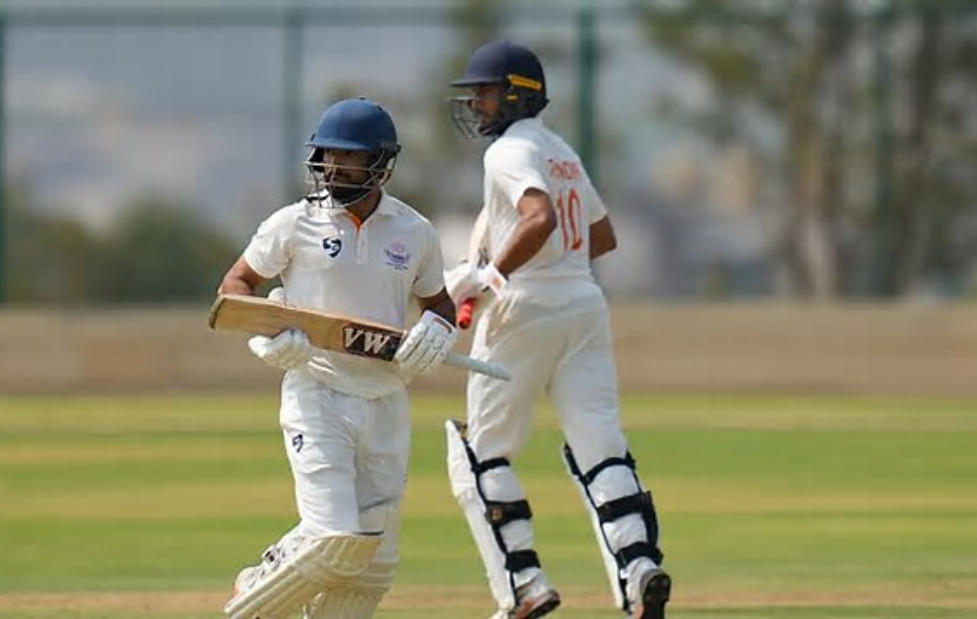
India’s domestic cricket calendar has arrived at a defining moment as the Ranji Trophy 2025–26 final commenced on February 24 in Hubballi, where eight-time champions Karnataka cricket team are taking on debut finalists Jammu and Kashmir cricket team at the KSCA Stadium. Beyond the pursuit of silverware, the match carries wider significance for Indian cricket, offering a platform for established international players and emerging talents to demonstrate their red-ball credentials at a time when Test squad depth remains a strategic priority.
What the Decision Means-
The final represents more than a championship contest , it highlights the growing competitiveness of India’s domestic structure. Karnataka enter with experience, squad depth, and familiarity with high-pressure games, while Jammu & Kashmir’s presence signals the broadening talent pipeline across regions traditionally underrepresented in domestic cricket’s latter stages.
For players such as KL Rahul, participation offers an opportunity to reaffirm form in the longer format, particularly important amid ongoing selection debates around India’s Test batting lineup. Strong performances here could influence future national call-ups, reinforcing the tournament’s role as a selection benchmark rather than merely a domestic title event.
The Legal/Political Angle-
Although sports competitions are not typically framed through legal developments, governance and selection dynamics form an important backdrop. The tournament operates under the authority of the Board of Control for Cricket in India, which has increasingly emphasized domestic performance as a prerequisite for national selection across formats. Recent administrative messaging has encouraged centrally contracted players to prioritize red-ball participation, reflecting a policy shift toward strengthening the Test ecosystem.
Jammu & Kashmir’s progression to the final also carries symbolic importance, aligning with broader institutional efforts to promote sporting infrastructure and professional pathways in all regions. Success at this level can influence future funding, grassroots programs, and regional cricket development strategies.
Impact on Bilateral/Global Relations- While the Ranji Trophy is a domestic competition, its outcomes indirectly affect India’s international cricket standing. A strong domestic structure enhances the national team’s competitiveness globally by ensuring a steady supply of match-ready players. Performances in the final may shape India’s squad composition for upcoming international tours, influencing how the country competes against major cricketing nations.
Additionally, televised domestic finals contribute to India’s reputation as a cricketing powerhouse with depth beyond its international stars. This perception has commercial and diplomatic value within the global cricket ecosystem, particularly in discussions involving scheduling, tournaments, and broadcast partnerships.
Market and Investor Reactions-
From a commercial perspective, domestic cricket finals have become increasingly valuable media properties. Broadcasters and streaming platforms benefit from rising viewer engagement, especially when high-profile players participate. Sponsorship visibility during marquee domestic matches offers brands targeted exposure to dedicated cricket audiences.
The participation of recognizable international names tends to boost advertising interest and digital viewership metrics. For cricket administrators, sustained commercial viability of domestic tournaments strengthens revenue diversification beyond international fixtures, a critical factor in long-term sports economics.
The Bottom Line-
The Ranji Trophy final between Karnataka and Jammu & Kashmir is both a sporting contest and a reflection of India’s evolving cricket landscape. For Karnataka, it is a chance to reinforce legacy; for Jammu & Kashmir, an opportunity to script history. More broadly, the match underscores the importance of domestic cricket in shaping national team fortunes, regional development, and commercial growth.
As the game unfolds over five days, performances here could influence selection debates, investment priorities, and perceptions of India’s cricketing depth, ensuring that the outcome resonates well beyond the boundary ropes.
Read more Mohammad Amir Slams India After Crushing T20 World Defeat

2.jpg)
2.jpg)
2.jpg)
2.png)