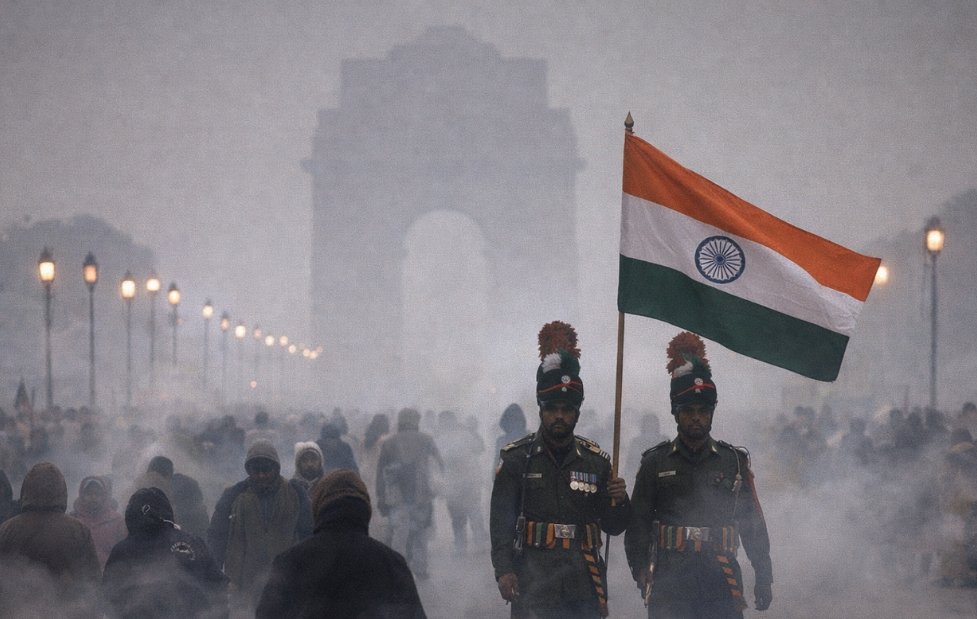
Delhi experienced its coldest Republic Day morning since 2021 as temperatures dipped to 3.6°C, intensifying winter conditions across the national capital. The sharp fall in mercury, accompanied by calm winds and rising pollution levels, made the day unusually harsh for residents even as the city celebrated the 76th Republic Day with ceremonial pride and patriotic fervor.
According to weather officials, the sudden chill was caused by cold northwesterly winds from the Himalayan region, which significantly lowered night temperatures. Several parts of Delhi reported biting cold during early morning hours, while shallow fog was observed in low-lying areas, slightly affecting visibility in isolated pockets.
Despite clear skies later in the day, the sunshine offered only limited relief. The persistent cold conditions continued throughout the morning, particularly impacting commuters, sanitation workers, and security personnel deployed for Republic Day arrangements.
Major Developments from Delhi’s Weather and Air Quality Situation
- Minimum temperature recorded at 3.6°C, the lowest on Republic Day since 2021
- Cold wave like conditions felt across central, north, and outer Delhi
- Shallow fog reported during early morning hours
- Low wind speed restricted pollutant dispersion
- Air Quality Index (AQI) deteriorated to poor and very poor categories in several locations
- PM2.5 and PM10 levels remained significantly above safe limits
Air Quality Worsens Amid Cold Spell
The intensifying cold played a direct role in worsening Delhi’s air quality. Lower temperatures and reduced wind movement trapped pollutants close to the surface, leading to a visible haze in several areas. Monitoring stations across the capital recorded elevated particulate matter levels, raising concerns for public health.
Experts noted that such pollution spikes are common during peak winter, especially when temperature inversion occurs. Under these conditions, cold air near the ground prevents warmer air above from rising, allowing pollutants to accumulate rapidly.
Health Advisory for Residents
Authorities advised residents to remain cautious as the combination of extreme cold and poor air quality poses health risks, particularly for children, senior citizens, and individuals with respiratory or cardiac conditions.
- Limit outdoor exposure during early mornings
- Avoid strenuous physical activity when AQI remains high
- Use protective masks while commuting
- Keep track of official weather and pollution bulletins
Looking Ahead
Meteorological officials indicated that while slight improvement in temperature may occur over the coming days, winter conditions are expected to persist. Any significant improvement in air quality will largely depend on stronger winds or weather disturbances capable of dispersing pollutants. As Delhi navigates the peak of winter, the Republic Day cold wave has once again highlighted the capital’s recurring struggle with extreme weather and air pollution — a challenge that continues to affect daily life during the winter months.

.png)