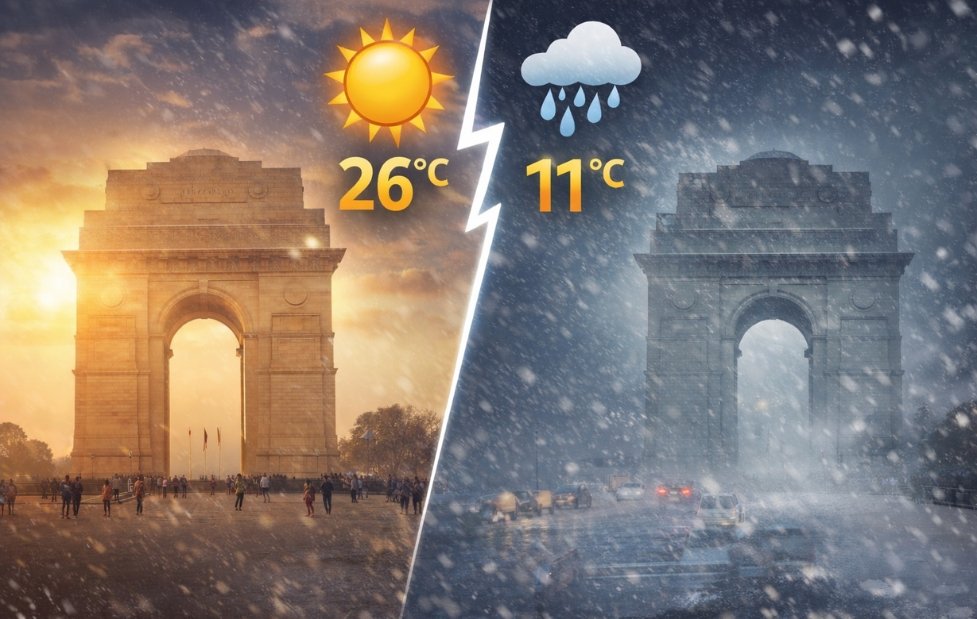
Delhi’s winter has taken a dramatic turn. After recording one of the warmest January days in recent years, the national capital has now been hit by rain, falling temperatures, and renewed winter chill—leaving many wondering what caused such a rapid change in weather.
Meteorologists say this shift is not unusual, but it reflects a complex interaction of atmospheric systems affecting North India.
A January That Started Unusually Warm
- In early January, Delhi experienced above-normal daytime temperatures, with mercury touching 24–26°C, nearly 4–6 degrees higher than average.
- Clear skies, weak western disturbances, and reduced cold air flow from the north allowed solar heating to dominate.
- Lack of cloud cover and minimal rainfall contributed to prolonged dry conditions, pushing temperatures higher.
This warmth even delayed the formation of fog and reduced the intensity of typical winter cold waves.
What Triggered the Sudden Rainfall?
The weather pattern changed sharply with the arrival of an active western disturbance.
- A western disturbance is a moisture-bearing system that originates near the Mediterranean region.
- As it moved across Pakistan and into North India, it brought cloud cover, moisture, and rainfall.
- This system interacted with cold northerly winds, leading to a noticeable temperature drop.
According to the India Meteorological Department (IMD), this disturbance was stronger than earlier systems seen this season.
Why Temperatures Dropped After Rain
Rain during winter often makes the weather feel colder due to:
- Cloud cover blocking sunlight, reducing daytime heating
- Evaporative cooling, where rainwater lowers surface temperature
- Cold winds following the system’s passage
As a result, Delhi witnessed a sudden shift from mild afternoons to chilly, damp conditions, especially during evenings and nights.
Fog and Cold to Return After Rain
Meteorologists warn that once skies begin to clear:
- Dense fog is likely to reappear in early mornings
- Minimum temperatures may drop further due to radiational cooling
- Cold wave-like conditions could return in pockets of northwestern India
This pattern rain followed by fog and cold is typical after active western disturbances.
Is Climate Change Playing a Role?
Weather experts say such sharp fluctuations are becoming more frequent.
- Climate variability is increasing temperature extremes within short periods
- Winters are now marked by warmer spells interrupted by sudden cold snaps
- Urban heat effects in Delhi also intensify temperature swings
While a single event cannot be blamed entirely on climate change, scientists note that erratic winter behavior is becoming the new normal.
What IMD Says Ahead
The IMD forecasts:
- Cooler days ahead with below-normal night temperatures
- Possible fog resurgence in Delhi-NCR
- No prolonged warm spell expected immediately after this rain episode
Residents are advised to stay prepared for rapid weather changes, especially early mornings and late nights.
The Big Picture
Delhi’s shift from the warmest January day to rainfall is the result of:
- A temporary break in winter systems
- Arrival of a strong western disturbance
- Interaction with cold northerly winds
- Changing climate patterns influencing seasonal stability
In short, winter hasn’t disappeared it simply paused before making a strong comeback. As experts point out, Delhi’s winters are no longer steady they swing, sometimes within just a few days.


.png)