

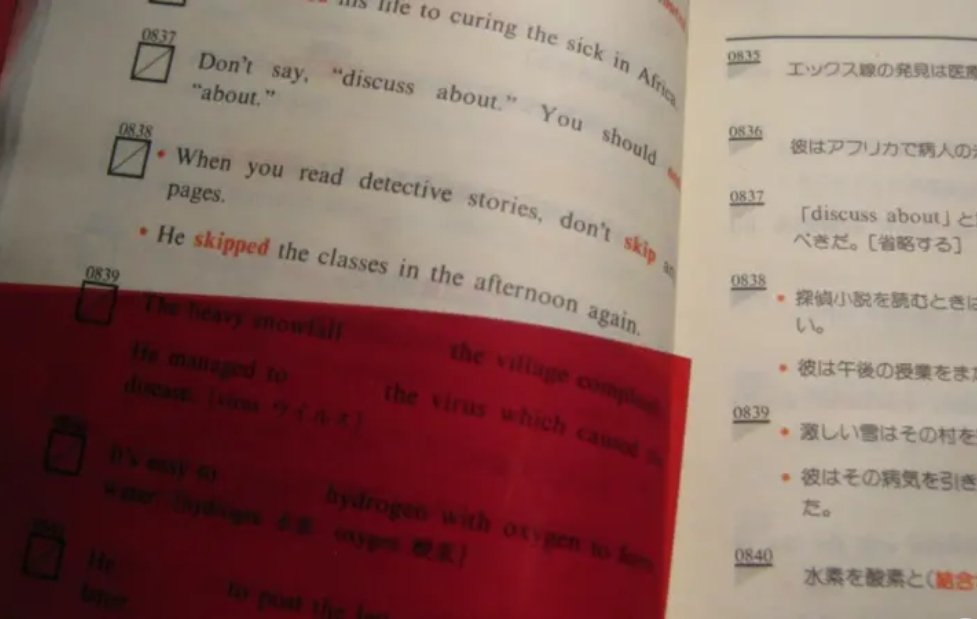
What Is the Red Paper Study Method?
Many students in Japan use a simple yet effective learning trick involving red paper or red transparent sheets. The method works by covering study notes written in specific colored ink—usually red or blue—to test memory recall.
The technique is widely used for memorising vocabulary, formulas, historical facts, and exam-based content.
How the Red Paper Technique Works
The strategy relies on color filtering and active recall learning.
Students typically:
- Write important answers or keywords in red ink
- Write questions or main text in another color
- Place red transparent paper over notes
- The red ink becomes less visible or hidden
- Students try to recall the hidden information
This forces the brain to actively retrieve information instead of passively reading it.
Why This Method Improves Memory
Education experts say the technique is effective because it combines two powerful learning principles:
Active Recall
When students try to remember hidden information, the brain strengthens memory connections. This improves long-term retention compared to simple reading.
Self-Testing
The method allows students to quiz themselves repeatedly without needing additional materials or supervision.
Repeated retrieval helps improve exam performance and understanding.
Why Red Color Is Specifically Used
Red transparent sheets work because they blend with red ink, making it difficult to see the text underneath. This visual masking helps simulate flashcard-style learning in notebooks.
Red is also considered a high-attention color, which may help highlight important information during initial note-taking.
Subjects Where This Method Is Commonly Used
Japanese students often use red paper while studying:
- Language vocabulary and grammar
- Mathematics formulas and definitions
- Science terminology
- History dates and facts
- Entrance exam preparation material
The method is particularly popular among school students preparing for competitive academic exams.
Advantages of the Red Paper Study Method
Students benefit from:
- Low-cost and simple learning tool
- Improved memorisation through repetition
- Increased engagement with study material
- Easy self-evaluation during revision
The technique also helps break monotony in traditional note revision.
Can Students Outside Japan Use This Method?
Learning experts say the technique works universally because it relies on psychological memory principles rather than cultural factors. Students can adapt the method by using:
- Colored pens and transparent sheets
- Digital note-taking tools with hidden answer features
- Flashcards with color-coded information
Consistency matters more than the specific material used.
Limitations of the Technique
While effective for memorisation, the method may not work as well for:
- Conceptual understanding
- Analytical problem-solving
- Creative or application-based learning
Experts recommend combining it with other study techniques like practice tests and conceptual revision.
The Takeaway
The red paper study method used by Japanese students is a simple yet powerful learning strategy that improves memory through active recall and self-testing. While it works best for factual learning and revision, combining it with deeper conceptual study methods can create a balanced and effective learning routine.
Read more BTech in Cybersecurity & AI vs BTech CSE: Which Degree Fits Today’s Job Market?
.png)

3.png)
2.jpg)

1.jpg)
1.jpg)
1.jpg)

.jpg)