

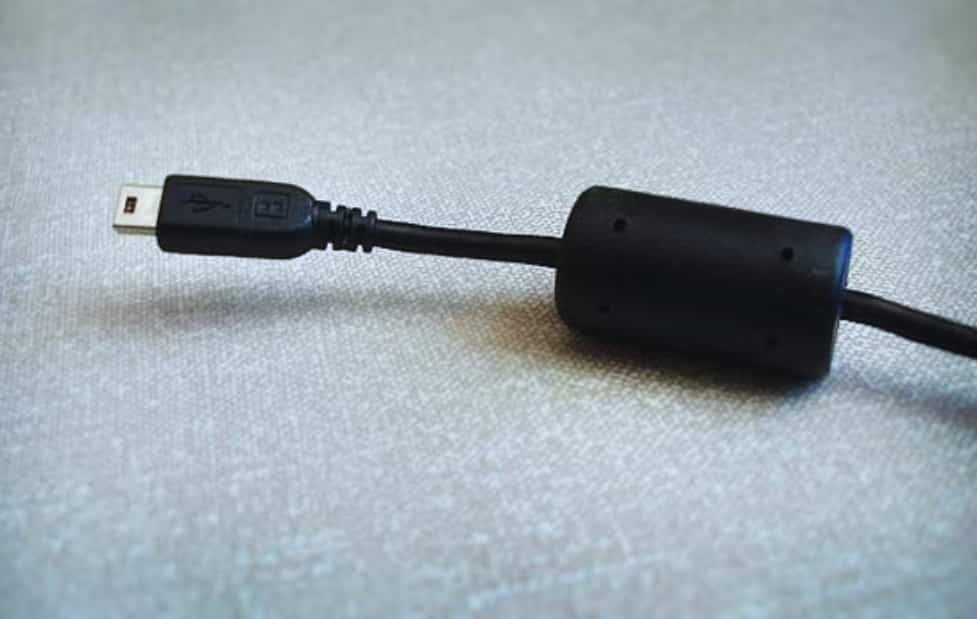
Have you ever noticed the small but obvious bump on your charging or USB cable and wondered why it’s there? Many people assume it’s decorative or simply a manufacturing leftover. In reality, that little bulge plays an important role in keeping your devices working smoothly and safely.
This feature is known as a ferrite bead. It is a small cylindrical component made from a magnetic material called ferrite, and its job is to reduce electrical noise. In everyday environments, electronic devices are surrounded by electromagnetic interference. This interference can come from Wi Fi routers, power adapters, nearby electronics, or even other cables running close by. When this unwanted noise enters a cable, it can interfere with charging stability or data transfer.
The ferrite bead works like a filter. As electrical current flows through the cable, the bead suppresses high frequency interference by absorbing it and converting it into a tiny amount of heat. This allows the correct signal to pass through without disruption. In simple terms, it helps keep the signal clean and stable while blocking unwanted disturbances.
These beads were especially common on older charging cables, computer accessories, and power cords. Over time, improvements in internal circuitry and device design have reduced the need for visible ferrite beads on many modern cables. Newer USB C and Lightning cables often include built in noise reduction within the connector or device itself. However, ferrite beads are still widely used in professional equipment, monitors, and sensitive electronics where even minor interference can cause noticeable issues.
Understanding this small component changes how we look at everyday technology. That bump on your cable is not random or useless. It was added intentionally to improve performance and protect devices from electrical disturbances. Even today, in many situations, it continues to serve this protective function quietly and efficiently.
So the next time you spot that odd lump on a cable, you will know it is more than just plastic. It represents smart engineering working behind the scenes to ensure your devices charge properly, transfer data reliably, and stay protected from unseen electrical noise.
You may also like AirPods Pro 3 Owners Report Persistent Static and Whistling Problems





1.jpg)
3.jpg)
4.jpg)
3.jpg)
4.jpg)