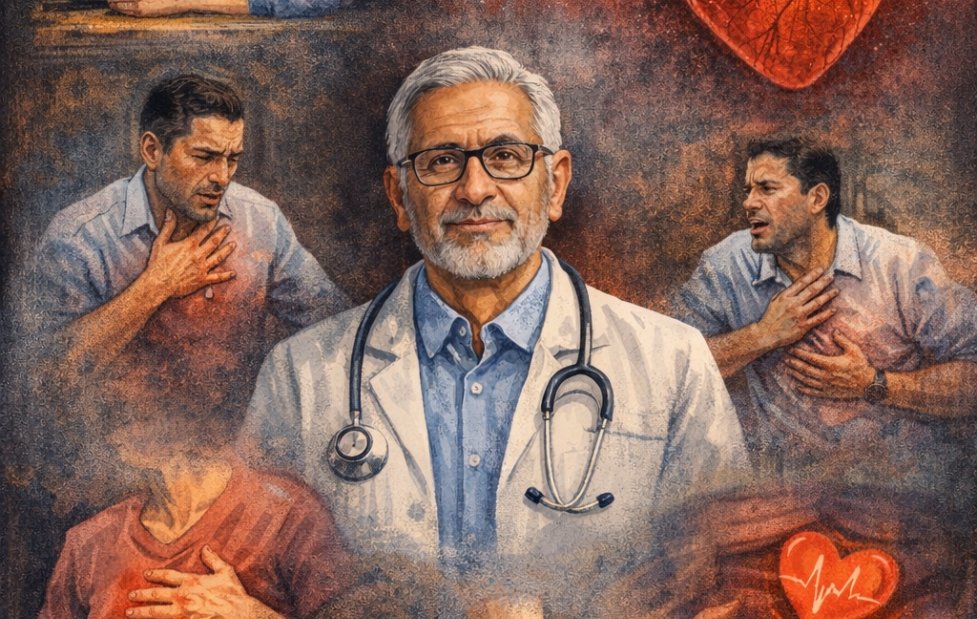
Heart disease often announces itself quietly long before chest pain or collapse forces emergency care. According to a Delhi-based cardiologist with over 40 years of clinical experience, many patients ignore early warning signs because they appear harmless or unrelated to the heart.
“Most heart attacks don’t begin suddenly,” the doctor explains. “The body usually sends small distress signals for months or even years—but people don’t recognize them.”
Here are five silent signs that may indicate your heart is struggling, even if routine life feels normal.
1. Unusual Fatigue That Doesn’t Improve With Rest
Persistent tiredness especially after light physical activity can be an early indicator of reduced blood flow to the heart.
Patients often describe feeling exhausted after climbing stairs, walking short distances, or completing daily chores they once managed easily. Unlike normal tiredness, this fatigue doesn’t go away with sleep.
According to cardiologists, this happens when the heart’s pumping efficiency declines, forcing the body to work harder for basic functions.
2. Shortness of Breath During Simple Activities
Breathlessness while walking, bending, or lying flat is one of the most overlooked heart symptoms.
When the heart struggles to pump effectively, fluid can begin to accumulate in the lungs, making breathing difficult even without exertion. Many patients mistake this for ageing, weight gain, or poor fitness.
“If breathlessness appears suddenly or worsens over weeks, it should never be ignored,” the doctor warns.
3. Frequent Indigestion, Bloating, or Chest Discomfort
Heart-related discomfort doesn’t always feel like sharp chest pain.
In many cases especially among older adults and women it appears as:
- Persistent acidity
- Upper abdominal heaviness
- Burning sensation after meals
- Pressure rather than pain
- Because these symptoms resemble digestive issues, patients often self-medicate with antacids while underlying cardiac problems worsen.
4. Swelling in Feet, Ankles, or Legs
Swollen ankles at the end of the day are commonly blamed on long hours of standing or poor circulation. However, recurring swelling can signal heart failure.
When the heart cannot pump blood efficiently, fluid begins to collect in lower parts of the body due to gravity.
“If swelling becomes daily or appears with breathlessness, it requires immediate cardiac evaluation,” the cardiologist notes.
5. Irregular Heartbeat or Sudden Palpitations
Occasional palpitations may be harmless, but frequent fluttering, racing heartbeats, or skipped beats can indicate rhythm disorders.
These irregularities may reduce blood supply to vital organs and increase the risk of stroke or sudden cardiac events.
Warning signs include:
- Palpitations occurring at rest
- Dizziness or light-headedness
- Sudden weakness
- Such symptoms should never be dismissed as stress alone.
- Why These Symptoms Are Often Ignored
- According to the cardiologist, the biggest danger lies in familiarity.
People normalize discomfort, assuming it’s due to:
- Stress
- Work pressure
- Ageing
- Poor sleep
- Lifestyle habits
By the time classic chest pain appears, significant damage may already have occurred.
“Your heart rarely fails overnight,” he says. “It deteriorates quietly.”
Who Should Be Extra Careful?
The doctor urges early screening for people with:
- High blood pressure
- Diabetes
- High cholesterol
- Family history of heart disease
- Smoking or alcohol habits
- Sedentary lifestyle
Even adults in their 30s and 40s are now presenting with serious cardiac conditions due to stress, poor diet, and lack of physical activity.
When to See a Doctor?
Seek medical advice if you notice:
- Persistent symptoms lasting more than two weeks
- Worsening fatigue or breathlessness
- Combination of two or more warning signs
Basic tests like ECG, echocardiography, and stress tests can detect problems early often preventing major heart events.
Heart disease doesn’t always strike dramatically. More often, it whispers.
Ignoring subtle signals can turn a manageable condition into a life-threatening emergency. Listening early through awareness, screening, and lifestyle changes—can save years of life.
As the cardiologist puts it:
“Your heart speaks softly before it screams. Learn to listen.”

.png)