

Global Currency Markets Shift Direction
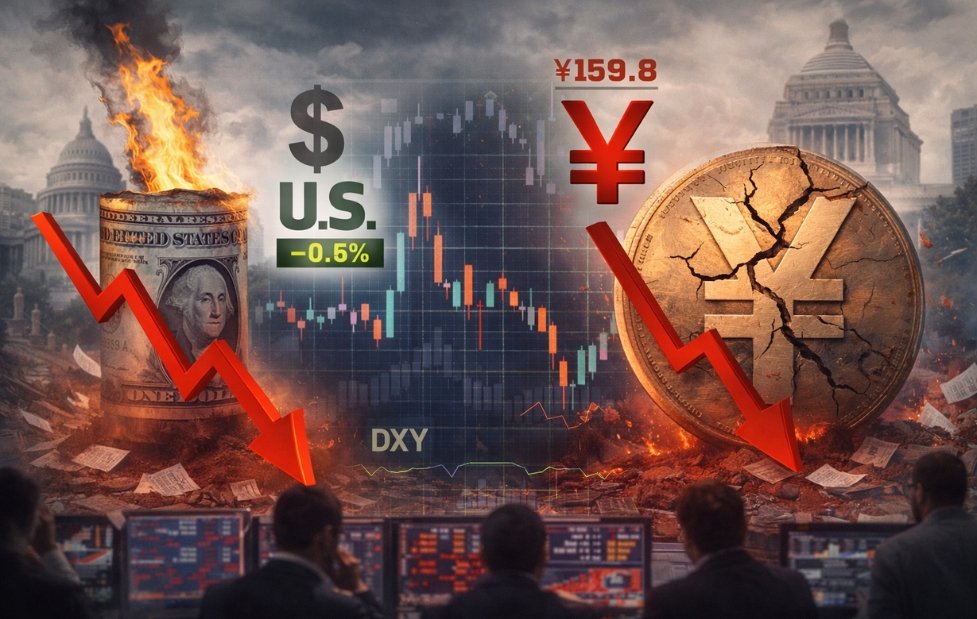
The U.S. dollar weakened sharply in early trading as investors revived the so-called “Sell America” trade, dumping U.S. assets amid rising concerns over fiscal stability, political uncertainty, and slowing economic momentum. At the same time, the Japanese yen slid to multi-month lows, pressured by mounting worries over Japan’s ballooning public debt and fragile fiscal position.
The diverging currency moves reflect growing unease across global markets, as investors reassess the long-term sustainability of both the world’s largest economy and Japan’s heavily indebted financial system.
What Is the ‘Sell America’ Trade?
The “Sell America” trade refers to a market rotation away from U.S. assets—including the dollar, Treasuries, and equities—when confidence in American fiscal discipline or political stability weakens.
This trade gained momentum after:
- Rising U.S. government debt crossed $36 trillion
- Persistent budget deficits widened despite economic growth
- Renewed political gridlock over spending and taxation
- Expectations that the Federal Reserve may begin easing policy later in 2026
- As yields softened and risk appetite shifted, investors increasingly moved capital toward emerging markets, gold, and select Asian currencies, pressuring the greenback.
- Dollar Index Slides as Confidence Erodes
The U.S. Dollar Index (DXY) slipped below key technical levels, falling against major peers including the euro, pound, and Swiss franc.
Market participants cited multiple pressure points:
- Declining U.S. bond yields reducing dollar attractiveness
- Growing concern over long-term debt sustainability
- Expectations of interest rate cuts later this year
- Increasing global diversification away from dollar-denominated assets
- A senior FX strategist noted, “The dollar is no longer the automatic safe haven. Investors are beginning to price in America’s fiscal risks, not just its strengths.”
Yen Falls as Japan’s Fiscal Outlook Worsens
While the dollar weakened broadly, the Japanese yen continued to slide, underperforming nearly all major currencies.
- The yen weakened as investors reacted to
- Japan’s public debt exceeding 260% of GDP
- Rising government bond issuance
- Political resistance to tax hikes
- Concerns that fiscal stimulus could expand further
- Recent comments from Japanese officials failed to reassure markets, reinforcing fears that Tokyo lacks a credible plan to stabilize its finances.
- The yen drifted closer to psychologically critical levels near ¥160 per dollar, reviving speculation of possible currency intervention by Japanese authorities
- Why Markets Are Losing Faith in the Yen
Japan’s problems extend beyond weak growth.
Key pressure points include:
- Ageing population shrinking the tax base
- Rising social security and healthcare costs
- Ultra-loose monetary policy legacy
- Limited room for aggressive interest rate hikes
- Although the Bank of Japan has begun slowly exiting its ultra-accommodative stance, interest rate differentials with the U.S. and Europe remain wide—continuing to weigh on the yen.
- Currency traders remain skeptical that Japan can defend the yen sustainably without fundamental fiscal reform.
- Safe Havens See Mixed Demand
Traditional safe-haven assets showed mixed performance:
- Gold prices edged higher, benefiting from dollar weakness
- Swiss franc strengthened modestly
- U.S. Treasuries saw limited inflows, signaling caution rather than panic
- This suggests investors are not fleeing risk entirely but are repositioning portfolios in anticipation of macroeconomic realignment.
- Global Markets React
The currency moves rippled across asset classes:
- Asian equities traded mixed
- Export-heavy Japanese stocks gained briefly due to weaker yen
- U.S. futures remained subdued
- Emerging market currencies firmed modestly
- Analysts noted that while equity markets remain resilient, currency markets are sending early warning signals about shifting confidence.
- Political Uncertainty Adds Pressure
Investor anxiety has also been fueled by political developments:
- Renewed debate over U.S. deficit spending
- Trade policy uncertainty under President Donald Trump’s second term
- Concerns about tariff escalation and fiscal populism
- Markets fear that aggressive domestic spending combined with protectionist policies could further strain U.S. finances while disrupting global trade flows.
What Happens Next?
- Analysts believe currency volatility could persist in coming weeks.
Key triggers ahead include:
- U.S. inflation data
- Federal Reserve policy guidance
- Japan’s supplementary budget announcements
- Any signs of Japanese currency intervention
- If U.S. yields continue falling while fiscal concerns intensify, the dollar may face sustained pressure despite its reserve-currency status.
- For the yen, traders warn that verbal intervention alone may no longer be sufficient. Without credible fiscal reform or coordinated action, weakness could deepen.
Bigger Picture: Confidence Is the Real Currency
The renewed “Sell America” trade highlights a deeper truth in global markets: currencies ultimately reflect confidence.
When confidence weakens whether due to debt, politics, or policy inconsistency capital moves swiftly.
As one market economist summarized:
“Markets can tolerate debt, deficits, and inflation but not uncertainty without a plan.”
For now, investors appear unconvinced that either Washington or Tokyo has fully articulated one.
The dollar’s retreat and the yen’s slide underscore a fragile moment for global financial markets. While the U.S. remains the world’s dominant economic power and Japan a key financial anchor in Asia, growing fiscal concerns are forcing investors to rethink long-held assumptions.
As the “Sell America” trade resurfaces and Japan’s debt worries intensify, currency markets are flashing a clear message: credibility matters—and it must be constantly earned.

.jpg)



2.jpg)
2.jpg)
2.jpg)
1.png)
2.jpg)