

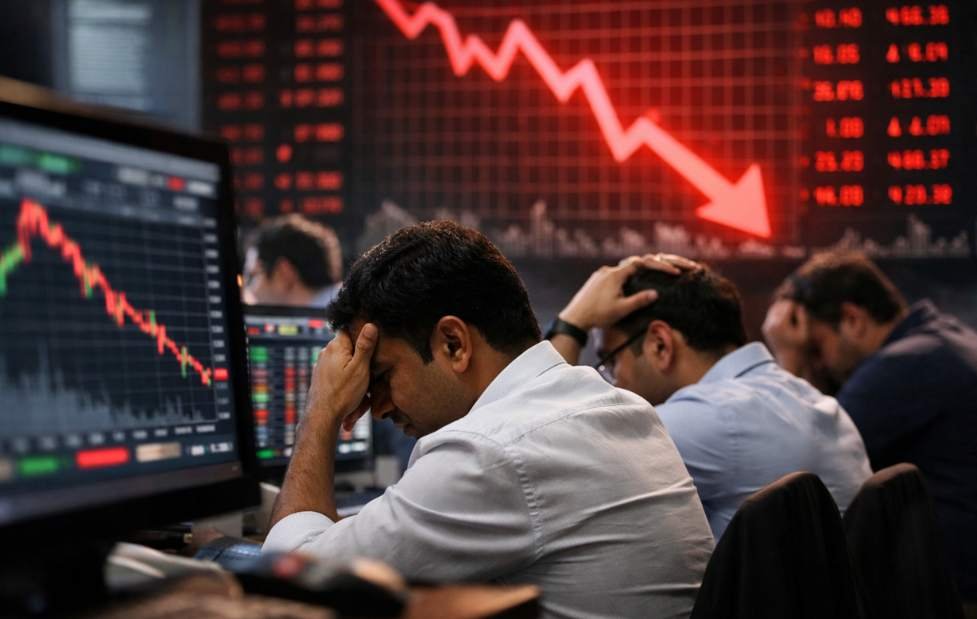
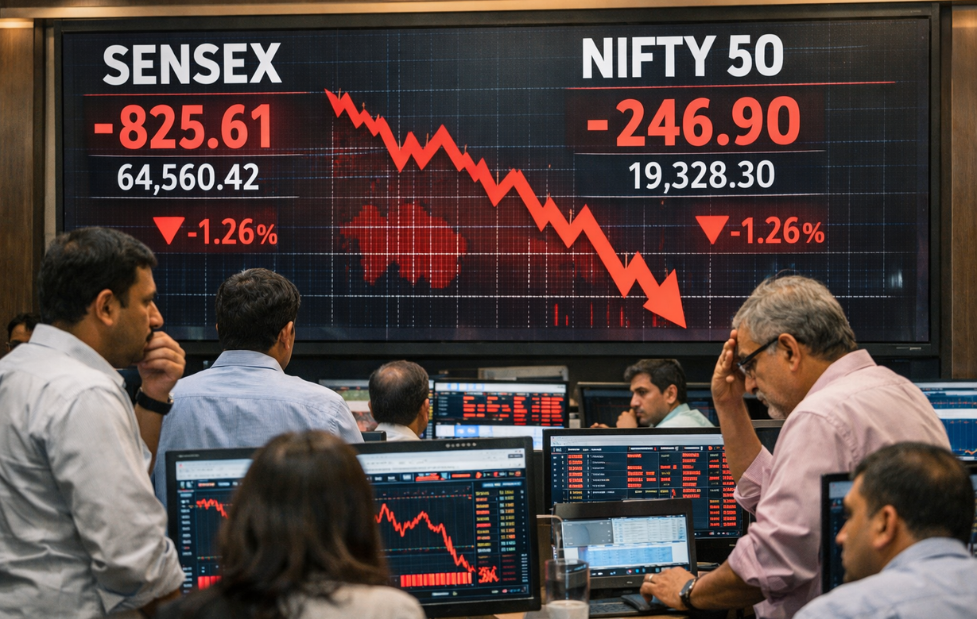
Indian stock markets experienced a sharp downturn as benchmark indices tumbled under pressure from renewed global trade tensions and continued foreign selling. The BSE Sensex plunged by hundreds of points and the NSE Nifty 50 index dipped significantly during trading, unsettling investors and wiping out large chunks of market value.
The decline was not isolated to a single session. Over the course of multiple days, both major indices have trended downward, reflecting persistent concerns about global trade conflicts and economic uncertainties. Trade war fears, particularly around tariff escalations and geopolitical dynamics, have weighed heavily on sentiment.
Economic data and corporate earnings reports that fell short of expectations also compounded the market weakness. Mixed quarterly results from heavyweight companies disappointed some investors, prompting portfolio adjustments and contributing to broader selling pressure.
Key factors behind the market slump:
- Renewed global trade war fears stirred market anxieties.
- Foreign institutional investors continued to pull funds from Indian equities.
- Mixed corporate earnings dampened investor confidence.
- Weak global cues and risk aversion added to selling pressure.
- Broader market indices including mid-cap and small-cap segments also slid amid the downturn.
As a result of these factors, investor wealth across the Indian equity market has dropped substantially. The sell-off was broad-based, affecting key sectors such as banking, technology, metals, and consumer services.
Market analysts note that global cues, especially involving potential tariff escalations between major economies, continue to play a significant role in shaping sentiment. These trade war concerns have reignited fears of slower economic growth, leading to risk-off behaviour among traders.
Investors often seek safer assets like gold and government securities during such turbulent periods, which further accelerates equity market declines. The sustained foreign outflows indicate that international investors are recalibrating risk exposure amid heightened volatility.
Despite the current downturn, some analysts caution investors to focus on long-term fundamentals rather than short-term volatility. Historically, markets have recovered from temporary shocks once global uncertainties ease and economic indicators stabilise.
For now, traders and policymakers will be watching closely for any signs of improvement in global trade conditions and domestic corporate performance to gauge the next phase of market direction.

.jpg)


2.jpg)
2.jpg)
2.jpg)
1.png)
2.jpg)