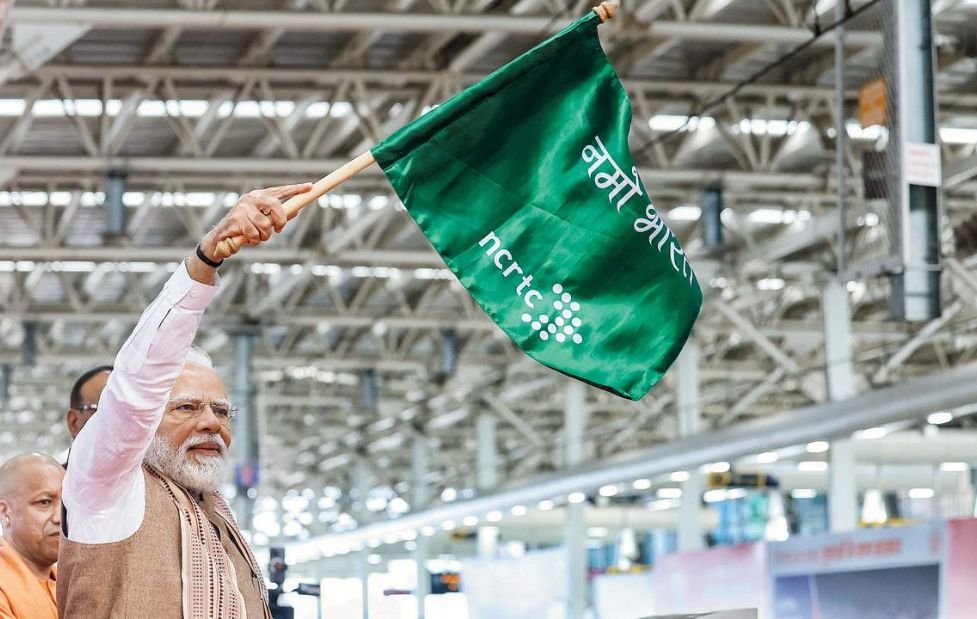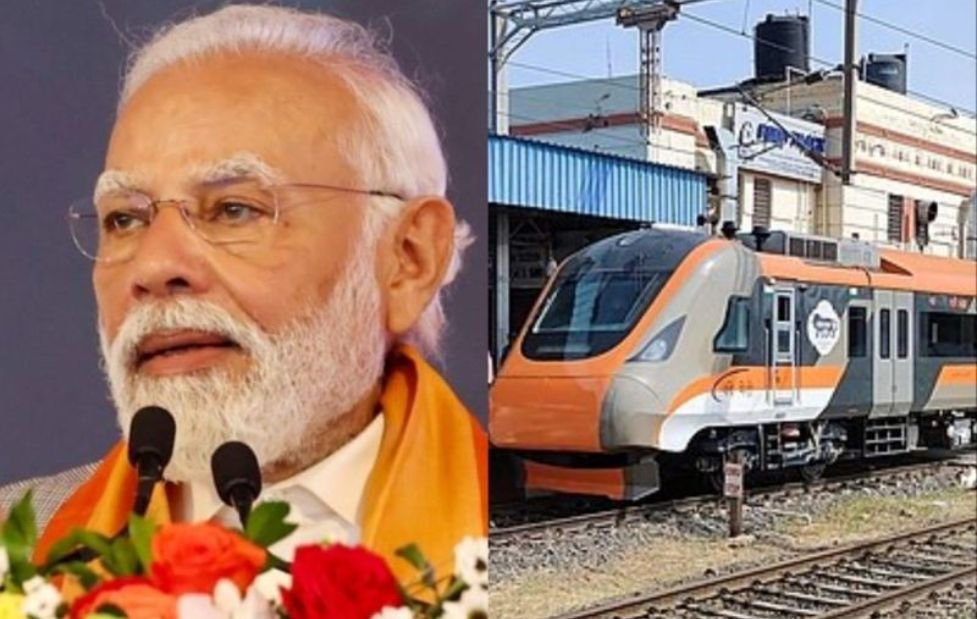
Prime Minister Narendra Modi inaugurated the remaining stretches of the 82-km Delhi–Meerut Regional Rapid Transit System (RRTS) corridor along with the 23-km Meerut Metro, significantly enhancing high-speed mobility across the National Capital Region. The launch enables seamless end-to-end travel between Delhi and Meerut in less than an hour through the semi-high-speed Namo Bharat network, designed for speeds up to 180 kmph. The Prime Minister, accompanied by Yogi Adityanath, described the twin launch as a milestone reflecting coordinated development efforts between central and state governments.
What the Decision Means-
The completion of the RRTS corridor represents a structural shift in regional transportation, reducing travel time, easing congestion, and improving economic integration across Delhi-NCR. Faster connectivity between urban centers such as Ghaziabad, Modinagar, and Meerut can support workforce mobility, expand residential options, and stimulate commercial activity in satellite cities.
The Meerut Metro, operating at speeds of up to 120 kmph and sharing infrastructure with the RRTS line, introduces a hybrid transit model that optimizes costs while maximizing coverage. For daily commuters, the project promises improved reliability compared with road transport, potentially lowering fuel consumption and travel expenses. Businesses located along the corridor may benefit from increased accessibility and footfall.
The Legal/Political Angle-
Large-scale infrastructure projects involve complex regulatory clearances, land acquisition frameworks, and intergovernmental coordination. The Delhi–Meerut RRTS has been implemented by the National Capital Region Transport Corporation (NCRTC), a joint venture between the central government and participating states, reflecting a cooperative federal governance model.
Politically, the project has been positioned as evidence of infrastructure-driven development, with references to the “double-engine government” narrative emphasizing alignment between national and state leadership. Such projects often play a role in shaping public perception around governance efficiency and economic progress.
Impact on Bilateral/Global Relations- India’s investment in high-speed regional transit infrastructure strengthens its global profile in urban mobility innovation. International technology suppliers, engineering firms, and investors often participate in such projects, creating opportunities for cross-border collaboration in rail technology, signaling systems, and sustainable transport solutions.
The success of the RRTS model could also influence infrastructure partnerships with other countries seeking scalable urban transit solutions. Demonstrating efficient execution and operational performance enhances India’s credibility as a destination for infrastructure investment and technology cooperation.
Market and Investor Reactions-
Infrastructure development typically generates positive sentiment across multiple sectors, including construction, real estate, transportation, and manufacturing. Improved connectivity between Delhi and Meerut may increase property demand in emerging urban clusters along the corridor, encouraging residential and commercial development.
Investors often view transport projects as catalysts for long-term economic growth, particularly when they improve logistics efficiency and labor mobility. Companies involved in rail equipment, engineering services, and urban development could see indirect benefits from similar projects planned across India.
The inauguration of the Delhi–Meerut RRTS corridor and Meerut Metro marks a significant step in India’s push toward faster, integrated regional mobility. By cutting travel time to under an hour and linking key economic hubs, the project has the potential to reshape commuting patterns and regional development.
Looking ahead, the operational success of this corridor will be closely watched as India expands rapid transit networks in other regions. If performance meets expectations, the RRTS model could become a template for future high-speed urban connectivity projects nationwide.
Read more Brazil India Trade Boost Lula Brings Mega Delegation To Delhi


.png)