

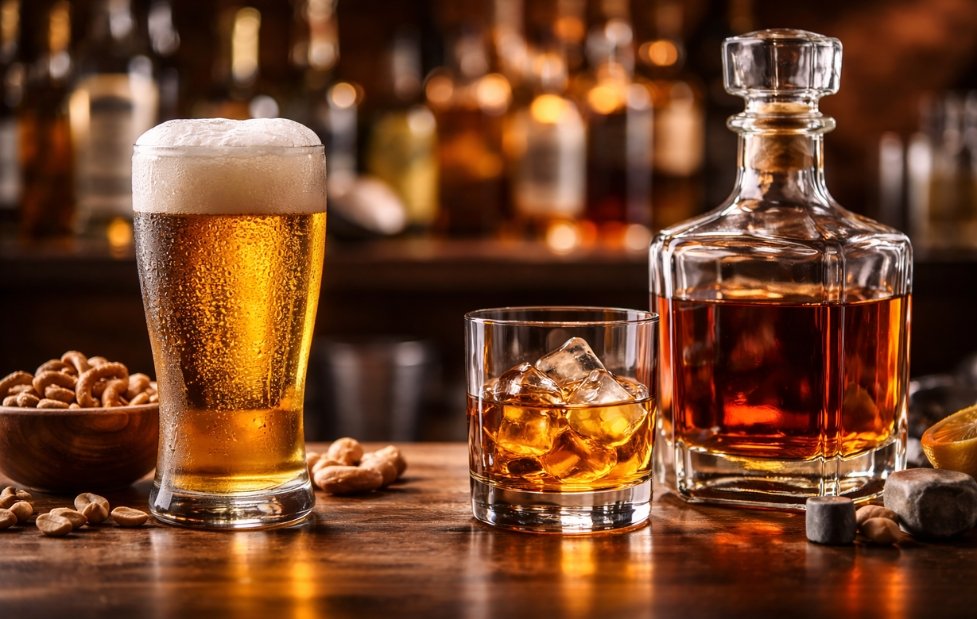
When it comes to alcohol, many people wonder whether choosing beer over whisky or vice versa makes any real difference to health. Doctors and nutrition experts say the answer is not about the drink itself, but about how much and how often it’s consumed.
Both beer and whisky contain ethanol, the primary substance responsible for alcohol’s health effects. However, their concentration, serving size, and drinking patterns can influence the level of harm they cause to the body.
Experts stress that while moderate consumption may reduce risk, no form of alcohol is completely safe.
Key Differences Between Beer and Whisky
- Beer: Lower alcohol content (usually 4–6%)
- Whisky: Much higher alcohol concentration (40–45%)
- Beer is usually consumed in larger volumes
- Whisky delivers more alcohol in smaller servings
- Both impact liver, heart, brain, and metabolism
What Experts Say About Beer
Doctors note that beer’s lower alcohol percentage means intoxication usually occurs more slowly. However, because people tend to drink beer in larger quantities, total alcohol intake can still become high.
Potential concerns include:
-
Higher calorie intake
-
Risk of weight gain and “beer belly”
-
Increased blood sugar spikes
-
Dehydration with binge drinking
In moderate amounts, beer may feel milder, but excess consumption carries the same long-term risks as other alcohol.
What Experts Say About Whisky
Whisky contains concentrated alcohol, meaning even small amounts significantly raise blood alcohol levels. Experts warn that spirits increase the risk of:
-
Liver damage
-
High blood pressure
-
Heart rhythm disturbances
-
Faster addiction potential
Because whisky is stronger, overconsumption can occur quickly especially when mixed with sugary beverages.
Which Is Actually Less Harmful?
According to health experts:
-
Neither beer nor whisky is “healthy.”
-
Harm depends on total alcohol intake, not the type
-
Drinking patterns matter more than drink choice
For example, one standard drink of beer and one measured shot of whisky can contain similar amounts of pure alcohol.
What Doctors Recommend
- Stick to recommended limits
- Avoid binge drinking
- Do not drink daily
- Eat before consuming alcohol
- Stay hydrated
For people with liver disease, hypertension, diabetes, or mental health concerns, experts advise avoiding alcohol altogether.
Experts agree that there is no safer alcohol only safer limits. Whether it’s beer or whisky, excessive drinking increases the risk of liver disease, heart problems, cancer, and addiction.
If health is the priority, moderation or abstinence remains the safest choice. Choosing one drink over another does not eliminate alcohol-related harm; how much you drink matters far more than what you drink.
Read more Liver Specialist Explains Which Medicines Should Never Be Mixed With Alcohol
2.jpg)
2.jpg)
3.jpg)
3.jpg)
1.jpg)
.jpg)
1.jpg)
.jpg)
2.jpg)
2.jpg)