

.jpg)
Finance Minister Nirmala Sitharaman presented the Union Budget 2026 in Parliament on Saturday, outlining a series of fiscal measures aimed at strengthening economic stability while supporting long-term growth. The Budget focused on balancing revenue generation with targeted relief for key sectors, amid global uncertainty and fluctuating market conditions.
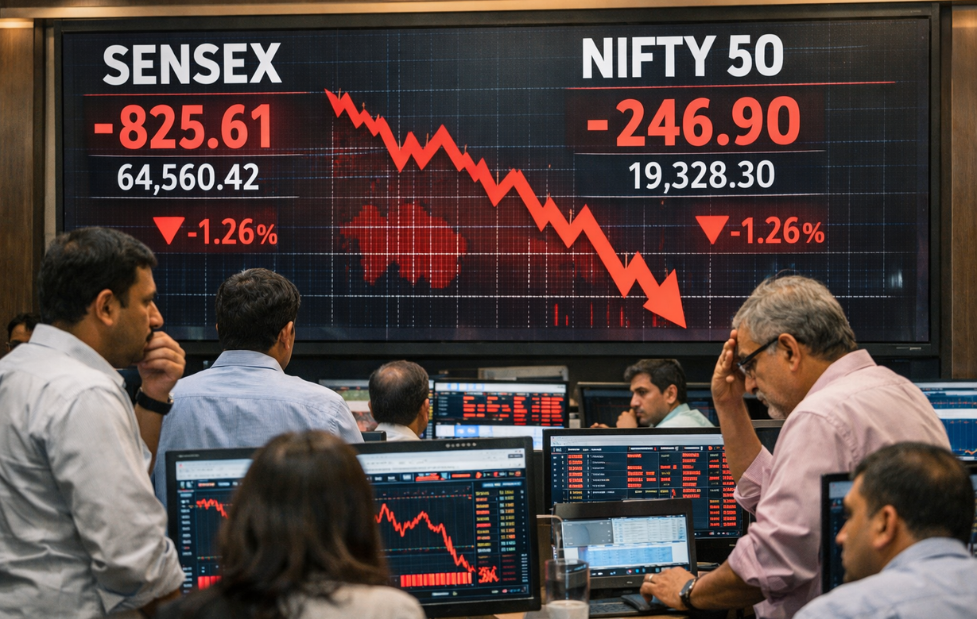
One of the most significant announcements in the Budget was the increase in transaction taxes on derivatives trading. The government proposed raising the Securities Transaction Tax on futures and options contracts, a move intended to curb excessive speculation and ensure greater participation of high-volume traders in tax contributions. According to the Finance Minister, the step seeks to improve market discipline and create a more balanced trading environment.
Following the announcement, market sentiment turned cautious, with investors closely monitoring the impact of higher transaction costs on trading volumes. Analysts believe the decision may lead to reduced speculative activity in the short term but could help stabilise markets over the long run by discouraging excessive leverage.
Alongside tax increases, the Budget introduced several customs duty reductions designed to support domestic manufacturing and lower input costs. The Finance Minister proposed duty cuts on selected aviation components and industrial parts, easing the burden on sectors dependent on imported raw materials and technology. These changes are expected to strengthen supply chains and enhance India’s competitiveness in global manufacturing.
The government also announced measures to encourage exports and imports by expanding the list of goods eligible for customs duty exemptions. Officials said the move would support export-oriented industries while helping domestic producers integrate more efficiently into international value chains.
On the fiscal front, the government reaffirmed its commitment to disciplined spending. The fiscal deficit for the next financial year was projected at 4.3 percent of GDP, reflecting a continued focus on gradual consolidation without compromising development goals. Capital expenditure allocations remained strong, particularly in infrastructure, transport and industrial development.
The Budget also included proposals aimed at social development. These covered investments in healthcare, education and skill development, along with initiatives to support women’s welfare and employment generation. The Finance Minister reiterated the government’s focus on transforming education into employment opportunities through targeted training programs.
Additional tax-related announcements included reduced TCS rates for overseas education and medical expenses, extended timelines for filing revised income tax returns, and simplified compliance measures for certain taxpayers. These steps were positioned as efforts to ease procedural burdens and improve taxpayer convenience.
Overall, Budget 2026 presented a mix of revenue-enhancing measures and growth-oriented reforms. While higher derivatives taxes may weigh on market sentiment in the near term, the combination of customs duty relief, infrastructure investment and fiscal discipline reflects the government’s strategy to maintain economic momentum while safeguarding financial stability.

.jpg)


2.jpg)
2.jpg)
2.jpg)
1.png)
2.jpg)