

Global electricity demand is rising at an unprecedented pace. AI-driven data centers, advanced manufacturing systems, electric vehicles, and large-scale electrification are placing enormous strain on power grids worldwide.
As demand surges, building new power plants and transmission lines alone may not be enough. Experts increasingly argue that the future of energy will depend not just on producing more electricity—but on using existing power far more efficiently.
Now, scientists at the U.S. National Renewable Energy Laboratory (NREL) believe they have developed a breakthrough that could significantly change how electricity is delivered, converted, and consumed.
Introducing ULIS: A Small Device With Big Potential
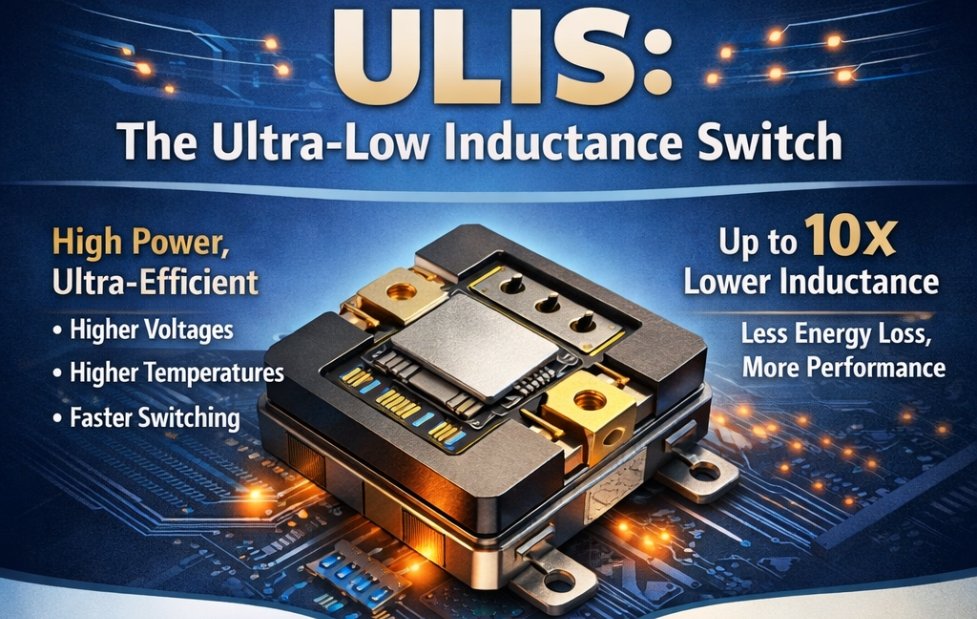
NREL researchers have unveiled a next-generation silicon-carbide (SiC) power module known as ULIS short for Ultra-Low Inductance Switch.
Despite its compact size, ULIS is capable of handling far more power than traditional silicon-based modules while producing substantially less heat and energy loss.
According to NREL, the new design delivers:
- Higher power density
- Lower electrical resistance
- Reduced energy waste
- Smaller and lighter hardware footprint
- Lower overall system costs
- In simple terms, ULIS allows more electricity to flow efficiently through power systems using fewer materials and less space.
- Why Power Modules Matter
Power modules are the silent workhorses of modern electricity systems. They sit inside:
- Data centers
- Electric vehicle drivetrains
- Fast-charging stations
- Solar and wind inverters
- Industrial motors
- Grid-scale power converters
- Their job is to convert electricity from one form to another such as AC to DC or high voltage to usable levels without losing energy as heat.
- Even small efficiency improvements can have massive global impact. A few percentage points of reduced power loss, when applied across millions of devices, translate into gigawatts of saved electricity.
- The Silicon Carbide Advantage
- Traditional power electronics rely heavily on silicon. While reliable, silicon struggles under high voltage and high temperature conditions.
- Silicon carbide changes that equation.
SiC materials can operate at:
1. valueation added on the Higher voltages
2. Higher temperatures
3. Higher switching speeds
4. This means power systems can be built smaller while delivering more output—exactly what energy-intensive industries now require.
5. ULIS leverages these advantages while addressing a long-standing limitation: internal electrical inductance, which causes energy loss and heat buildup.
What Makes ULIS Different?
The key innovation behind ULIS lies in its ultra-low inductance design.
By radically reconfiguring how electrical current flows inside the module, researchers minimized internal resistance and electromagnetic interference. This allows power to switch faster and cleaner, reducing wasted energy.
NREL engineers report that ULIS achieves:
Up to 10× lower inductance compared to conventional designs
Significant efficiency gains at high switching frequencies
Improved reliability under heavy loads
This is particularly crucial for applications like AI data centers, where power demand fluctuates rapidly and inefficiencies multiply instantly.
Why This Matters for AI and Data Centers
Modern AI workloads consume enormous electricity. Large data centers already rival small cities in energy usage.
As AI models grow more complex, the demand for high-performance, energy-efficient power delivery becomes critical.
ULIS could help:
- Reduce energy loss inside data centers
- Lower cooling requirements
- Cut operational costs
- Increase power availability without new infrastructure
- In effect, better power electronics allow existing grids to support more computation using the same electricity supply.
- Impact Beyond Computing
- The implications extend far beyond AI.
ULIS technology could significantly improve:
- Electric vehicle efficiency and driving range
- Fast-charging infrastructure reliability
- Renewable energy integration
- Industrial automation systems
- Military and aerospace power systems
- By shrinking hardware size while increasing power handling, manufacturers can design lighter vehicles, smaller chargers, and more compact energy systems.
Lower Cost, Higher Scalability
One of the most promising aspects of ULIS is cost.
Although silicon carbide materials are more expensive than traditional silicon, NREL’s design reduces the amount of material needed while simplifying manufacturing.
That combination could make advanced power electronics cheaper at scale, accelerating adoption across industries.
A Quiet Energy Revolution
Unlike flashy battery breakthroughs or nuclear fusion headlines, power electronics rarely capture public attention. Yet experts argue they may deliver some of the fastest real-world climate and efficiency gains.
Improving how electricity flows rather than only how it’s generated offers immediate impact without waiting decades for new infrastructure.
ULIS represents exactly that approach.
What Comes Next
- NREL researchers are now working with industry partners to move ULIS from laboratory prototype to commercial deployment.
- If successfully scaled, the technology could begin appearing in next-generation:
- EV powertrains
- High-voltage chargers
- Grid converters
- AI infrastructure
Its influence could quietly reshape how the world consumes electricity one module at a time. As global energy demand accelerates, efficiency is becoming as valuable as generation itself. The ULIS power module shows how smarter electronics not just bigger power plants could define the next era of energy use. Small in size but massive in impact, this tiny device may help power the future more cleanly, cheaply, and intelligently than ever before.
Read more Government Warns Users About Scams Targeting WhatsApp And Matrimony Platforms





1.jpg)
3.jpg)
4.jpg)
3.jpg)
4.jpg)