

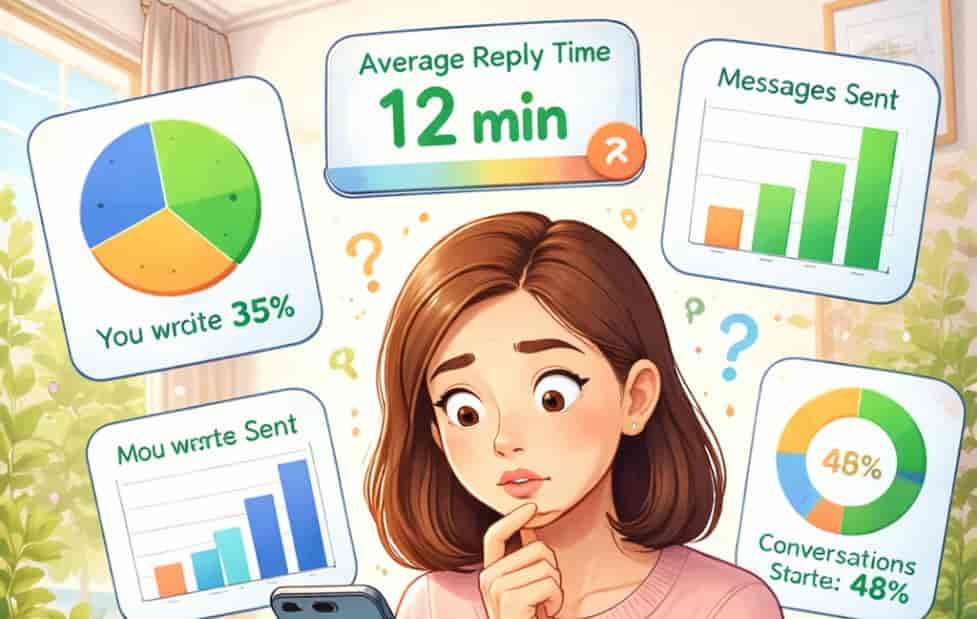
A groundbreaking study from Bielefeld University, Germany has revealed a surprising truth: most people are poor judges of their own WhatsApp behavior. Whether you think you reply too slowly, send too many messages, or dominate group chats, the data suggests your perception is likely wrong.
Published in the journal Computers in Human Behavior, the research used real WhatsApp metadata not self-reported surveys to compare what people believe about their messaging habits with what they actually do.
The result? A massive perception gap between digital self-image and reality.
What the WhatsApp Research Found
The study was led by Olya Hakobyan and Professor Hanna Drimalla at Bielefeld University. Participants donated anonymized WhatsApp data through a specially designed platform that tracked:
- Response times
- Message frequency
- Who initiated conversations
- How much people wrote compared to others
Importantly, no message content was accessed only metadata.
The findings were consistent:
“People’s assumptions about how they communicate are often inaccurate,” said Hakobyan.
Many participants believed they replied late, wrote too much, or contributed less than others. When confronted with real data, they discovered their self-assessments were wrong.
Why We Get Our Messaging Habits Wrong
Psychologists explain this using cognitive bias and selective memory. People remember emotionally charged moments like replying late to an important message but forget the dozens of normal interactions where they behaved just fine.
This leads to:
- Guilt
- Anxiety
- Self-censorship
- Relationship misunderstandings
In reality, the data showed most people communicate normally and proportionally, but believe otherwise.
Seeing the Data Changes Everything
When participants saw visual graphs of their WhatsApp behavior, their self-perceptions changed immediately and permanently.
People who thought they were slow realized they weren’t. Those who thought they dominated chats discovered they were average. Most importantly, these corrections did not cause stress or embarrassment.
The study found:
- Self-image improved
- Emotional stability remained unchanged
- Relationship confidence increased
This suggests data-driven feedback is psychologically safe and effective.
Why This Matters for Mental Health and Relationships
Misjudging digital behavior damages real relationships. A person who believes they are unresponsive may apologize excessively or withdraw. Someone who thinks they talk too much may stay silent unnecessarily.
These false beliefs create:
- Social anxiety
- Relationship tension
- Digital burnout
- The study shows that objective data can break this cycle.
How the WhatsApp Data Was Collected
The researchers created a secure data-donation platform that:
- Removes personal identifiers
- Analyzes only metadata
- Creates easy-to-understand charts
- Allows private self-comparison
- The same system is still active and is now used for WhatsApp and Facebook data studies.
A New Future for Digital Self-Awareness
The researchers call this approach “interaction awareness” using data instead of emotion to understand how we really communicate.
Experts believe this could help:
- Relationship counseling
- Workplace communication
- Digital wellness programs
- Mental health therapy
- Instead of guessing, people can now know.
The Bottom Line
Your WhatsApp behavior is probably not what you think it is. This study proves that memory lies but data doesn’t. In a world where digital communication shapes relationships, careers, and emotional well-being, seeing the truth about how we actually communicate could be one of the most powerful tools for self-understanding. And that might be the most important message of all.




1.jpg)
3.jpg)
4.jpg)
3.jpg)
4.jpg)