

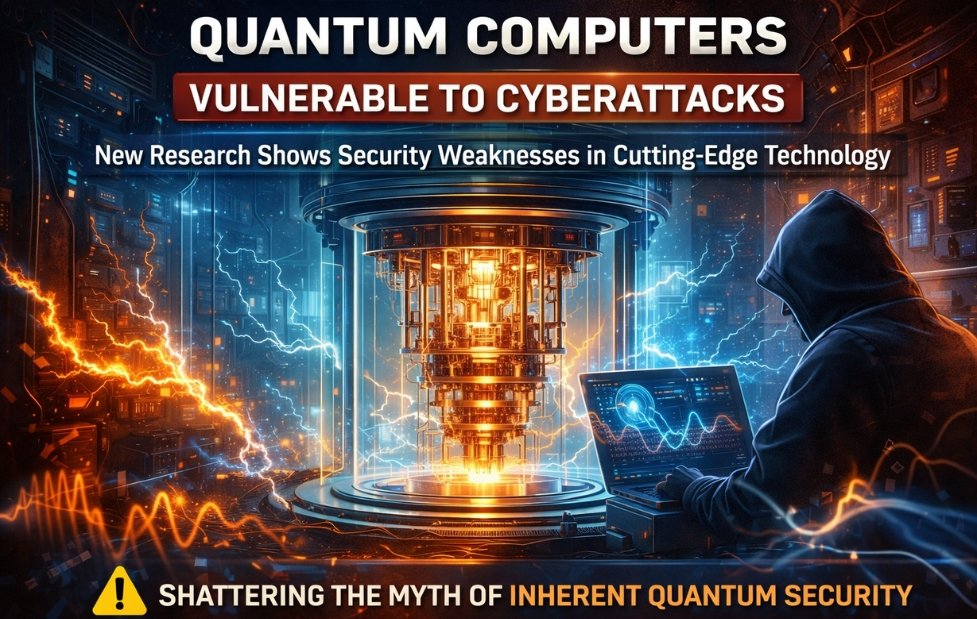
Quantum computers are often described as unbreakable machines of the future, capable of solving problems far beyond the reach of classical computers. From accelerating drug discovery to transforming finance and artificial intelligence, their potential is enormous. However, new research is challenging this narrative, warning that today’s quantum computers may suffer from serious and largely overlooked security vulnerabilities.
The myth of inherent quantum security
Quantum technology is widely associated with strong security, especially due to principles like quantum encryption. But researchers now emphasize that quantum advantage does not automatically mean quantum safety. While much attention has focused on software-level threats, recent findings show that vulnerabilities can exist much deeper—within the physical hardware of quantum machines themselves.
Unlike traditional computers, quantum systems rely on extremely delicate components such as qubits, cryogenic systems, and precise electromagnetic controls. These physical elements can unintentionally leak information, creating potential entry points for attackers.
Hardware-level threats raise alarms
The research highlights that hackers may be able to exploit side-channel attacks, where sensitive data is inferred by observing physical signals like electromagnetic emissions, timing variations, or energy fluctuations. In quantum computers, such leaks could expose proprietary algorithms, confidential computations, or even cryptographic keys.
Because quantum hardware is still experimental and custom-built, many systems lack standardized security protections. This makes them especially attractive targets for industrial espionage, nation-state actors, and cybercriminals seeking access to cutting-edge intellectual property.
Why this matters now
As governments, universities, and corporations race to achieve quantum supremacy, access to quantum machines is expanding through cloud platforms and shared research facilities. This increased accessibility also increases risk. If vulnerabilities are not addressed early, insecure quantum systems could undermine trust in the very technologies meant to define the next computing era. The concern is not just future misuse. Researchers warn that data harvested today could be exploited tomorrow, once attackers better understand quantum weaknesses.
Rethinking quantum cybersecurity
Experts are calling for a shift in how quantum security is approached. Protecting quantum computers will require integrating cybersecurity, hardware engineering, and quantum physics from the ground up. This includes shielding hardware, monitoring physical emissions, and designing quantum systems with security as a core feature rather than an afterthought. Quantum computers may still revolutionize science and industry but this research serves as a clear reminder: even the most advanced machines are only as secure as the systems protecting them.




1.jpg)
3.jpg)
4.jpg)
3.jpg)
4.jpg)