

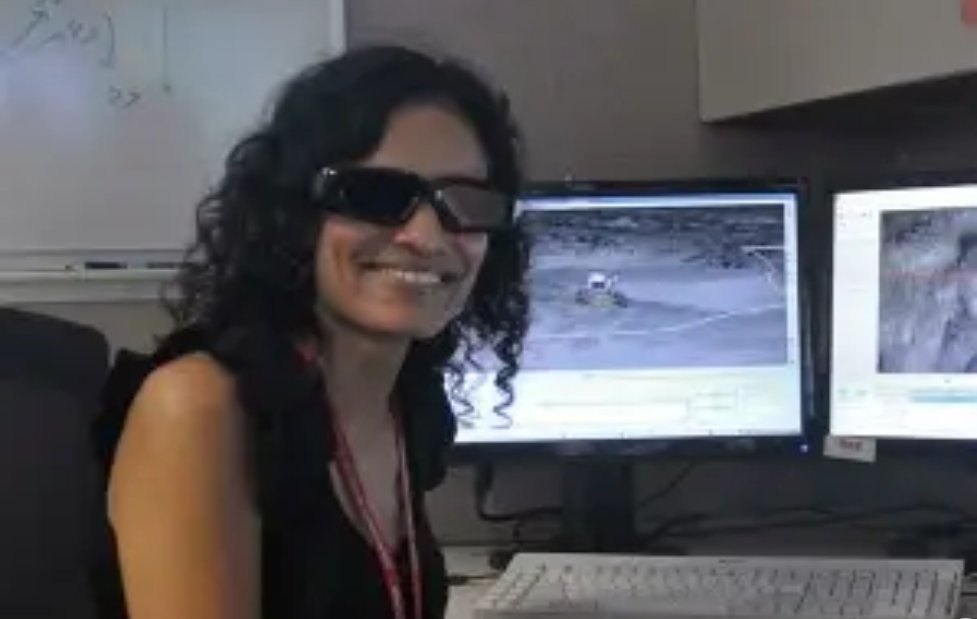
Who Is Vandi Verma?
Vandi Verma is an Indian-origin robotics engineer and scientist working at NASA’s Jet Propulsion Laboratory (JPL). She is widely recognized for her contributions to robotic mobility systems that allow Mars rovers to navigate autonomously across the Red Planet.
Originally from India, Verma pursued engineering and later moved into advanced robotics and space exploration research. Over the years, she has become one of the key minds behind autonomous rover driving technology.
Her Role in the Perseverance Mars Mission
Verma is closely associated with the operations and autonomy systems of the Mars 2020 Perseverance Rover. The rover, which landed on Mars in 2021, was designed to explore the planet’s surface, search for signs of ancient life, and collect geological samples.
Her work focuses on enabling Perseverance to:
- Navigate rough Martian terrain safely
- Make driving decisions using onboard AI
- Avoid obstacles without waiting for Earth-based instructions
- Travel faster and more efficiently across Mars
Because communication between Earth and Mars can take several minutes, autonomous driving technology is crucial for real-time navigation.
How AI Helps Perseverance Drive on Mars
Mars rovers traditionally relied heavily on manual driving commands sent from Earth. Verma helped develop smarter navigation systems that allow Perseverance to “think” while moving.
The AI system allows the rover to:
- Analyze terrain using cameras and sensors
- Identify safe driving paths
- Adjust routes automatically
- Improve exploration efficiency
This capability is often referred to as “self-driving technology for Mars,” representing a major step forward in robotic space missions.
Why Autonomous Driving Is Critical in Space Exploration
Mars presents extremely challenging terrain, including:
- Rocky surfaces
- Steep slopes
- Dust storms
- Unknown geological hazards
Autonomous AI allows rovers to cover more distance and collect more scientific data compared to earlier missions that required constant human control.
Verma’s contributions have helped reduce mission risks and increased the rover’s ability to explore complex environments.
Her Journey Into Space Robotics
Vandi Verma’s career path combines mechanical engineering, robotics, and artificial intelligence. At NASA JPL, she has worked on multiple rover missions, including:
- Testing rover mobility systems
- Designing autonomous navigation software
- Supporting mission operations teams
Her interdisciplinary expertise has made her a leading figure in robotic exploration technology.
Inspiring Representation in STEM and Space Research
Verma is often highlighted as an inspiring figure for students and engineers, particularly those from diverse backgrounds entering science and technology fields. Her success reflects the global collaboration behind modern space exploration.
She has also been active in encouraging young scientists to pursue careers in robotics, artificial intelligence, and aerospace engineering.
How Her Work Shapes Future Space Missions
Autonomous navigation technologies developed for Perseverance could play a major role in future missions, including:
- Next-generation Mars rovers
- Lunar exploration robots
- Deep-space robotic missions
- Human-assisted exploration planning
AI-driven robotics is expected to become central to space exploration strategies in the coming decades.
The Takeaway
Indian-origin NASA roboticist Vandi Verma has helped revolutionize how rovers explore Mars by enabling AI-powered autonomous driving for the Perseverance mission. Her work not only advances scientific discovery on Mars but also sets the foundation for smarter robotic exploration across space.
As AI and robotics continue shaping space research, pioneers like Verma are helping humanity explore distant worlds more safely and efficiently.
Read more Apple Expands Footprint in Bengaluru With New Education Hub to Train Workforce in Future Skills




1.jpg)
3.jpg)
4.jpg)
3.jpg)
4.jpg)