

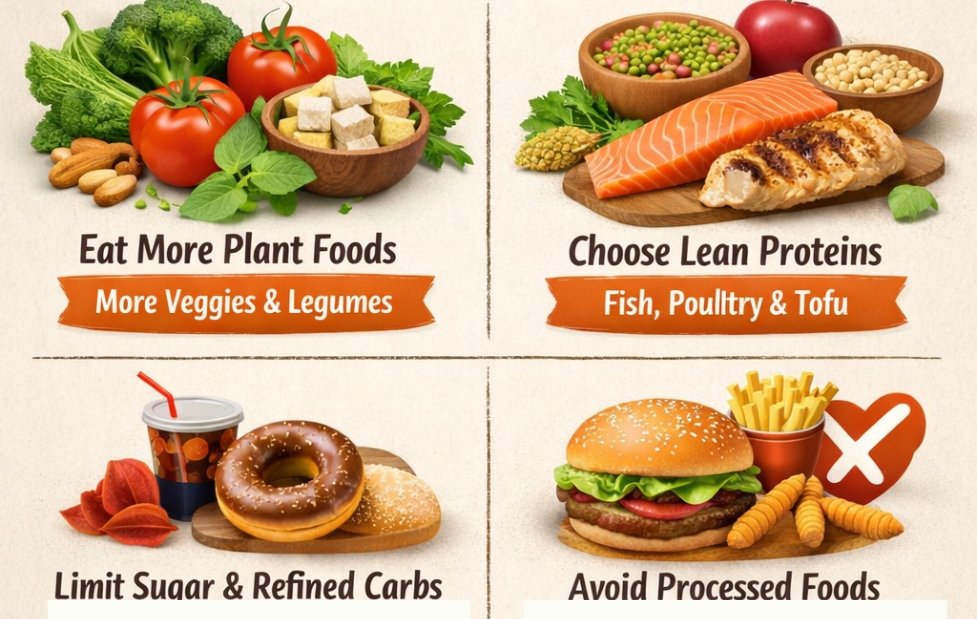
You don’t need a strict diet or expensive superfoods to protect your heart. Health experts say that small, consistent food changes can significantly lower cholesterol levels and reduce the risk of heart disease over time. Research shows that everyday dietary choices influence blood fats, inflammation, and blood vessel health making nutrition one of the most powerful tools for long-term heart protection. Easy Food Changes That Support Heart Health
1. Switch to Healthy Fats
- Replace saturated fats with healthier options:
- Use olive, mustard, or canola oil instead of butter or ghee
- Choose nuts and seeds in moderation
- Avoid trans fats found in packaged snacks
- These fats help lower LDL (“bad”) cholesterol while supporting good HDL cholesterol.
2. Add More Fiber to Daily Meals
- Soluble fiber helps remove excess cholesterol from the bloodstream.
- Good sources include:
- Oats and whole grains
- Beans, lentils, and chickpeas
- Fruits like apples and pears
- Vegetables such as carrots and broccoli
- Even small increases in fiber can improve cholesterol levels.
3. Eat More Plant-Based Foods
- Plant-rich diets are linked to lower heart disease risk.
- Increase vegetables at every meal
- Replace some meat meals with legumes or tofu
- Include leafy greens regularly
- Plant foods reduce inflammation and support healthy blood vessels.
4. Cut Back on Processed and Fried Foods
Highly processed foods often contain excess salt, sugar, and unhealthy fats.
Reducing intake can help:
- Lower cholesterol
- Improve blood pressure
- Reduce arterial inflammation
- Choose home-cooked meals whenever possible.
5. Choose Lean Protein Sources
- Fish, especially fatty fish like salmon, supports heart health
- Skinless poultry is better than red meat
- Plant proteins offer added fiber benefits
- Omega-3 fats from fish help reduce triglycerides and protect the heart.
6. Limit Added Sugar and Refined Carbs
Excess sugar can raise triglycerides and worsen cholesterol balance.
Reduce:
- Sugary drinks
- White bread and pastries
- Sweetened desserts
- Opt for whole grains and natural sweetness from fruits.
Why These Changes Matter
High cholesterol contributes to plaque buildup in arteries, increasing the risk of heart attack and stroke. Over time, unhealthy diets accelerate this process, while heart-friendly foods help reverse or slow it. Doctors say consistency matters more than perfection.
What Experts Recommend
- Focus on long-term habits rather than short diets
- Combine diet changes with regular physical activity
- Get cholesterol levels checked regularly
- Make gradual adjustments that are easy to maintain
Protecting your heart doesn’t require extreme dieting. Simple food swaps made daily can lower cholesterol, improve blood vessel health, and significantly reduce the risk of heart disease.
Experts agree on one key message: small changes today can make a big difference for your heart tomorrow.
Read more Type of Carbs You Eat May Influence Dementia Risk, Study Suggests
2.jpg)
2.jpg)
3.jpg)
3.jpg)
1.jpg)
.jpg)
1.jpg)
.jpg)
2.jpg)
2.jpg)