

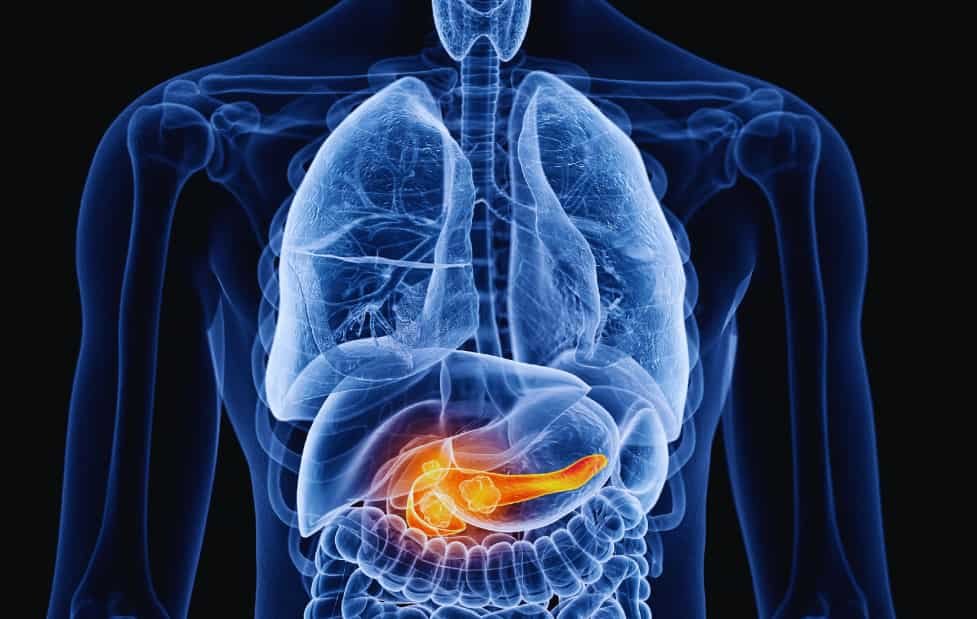
Pancreatic cancer remains one of the deadliest malignancies in modern medicine but a major breakthrough may have exposed its most vulnerable weakness. Researchers at Cold Spring Harbor Laboratory have identified a previously hidden three-part molecular circuit that drives the aggressive growth of pancreatic ductal adenocarcinoma (PDAC), the most common and lethal form of pancreatic cancer.
Published in Molecular Cell, the study reveals that disrupting just one key node in this circuit can collapse the entire cancer-promoting system offering a promising new direction for future therapies.
Why Pancreatic Cancer Is So Hard to Treat
PDAC is notorious for late diagnosis, rapid progression, and resistance to conventional therapies. Although most tumors carry mutations in the KRAS oncogene, drugs targeting KRAS often fail as cancer cells find alternative survival pathways.
This resistance has forced scientists to rethink their strategy: instead of targeting single genes, what if the disease is driven by self-reinforcing molecular networks?
The Three-Part Cancer Circuit Explained
The Cold Spring Harbor team discovered that pancreatic tumors rely on a feedback loop involving three powerful cancer-driving molecules:
- SRSF1 – a splicing regulator previously identified as an early PDAC trigger
- AURKA (Aurora Kinase A) – a protein that promotes cell division
- MYC – one of the most aggressive cancer-promoting transcription factors
Here’s how the loop works:
- SRSF1 alters AURKA through alternative RNA splicing
- AURKA stabilizes MYC, preventing its natural breakdown
- MYC boosts SRSF1 production
- The cycle repeats driving uncontrolled tumor growth
This loop acts like a perpetual engine, keeping cancer cells alive and proliferating.
Breaking the Loop With a Single Target
Rather than attacking all three components, researchers used an antisense oligonucleotide (ASO) a short synthetic RNA-based molecule to disrupt AURKA splicing.
The result was unexpected and dramatic.
Targeting AURKA alone:
- Reduced AURKA levels
- Destabilized MYC
- Shut down SRSF1 production
- Triggered apoptosis (programmed cancer cell death)
As lead researcher Adrian Krainer explained, the strategy effectively “killed three oncogenes with one intervention.”
Validated in Human Pancreatic Tumor Organoids
To ensure clinical relevance, the team tested their approach in human pancreatic tumor organoids 3D mini-tumors grown from patient samples that closely mimic real cancer behavior. Out of 12 ASO candidates, one ASO-A successfully dismantled the entire circuit. Treated organoids showed:
- Slowed tumor growth
- Structural collapse
- Widespread cancer cell death
This level of validation goes far beyond basic cell experiments.
Why This Discovery Is a Big Deal
This research shifts pancreatic cancer treatment from single-gene targeting to network disruption. Instead of chasing mutations one by one, scientists can now identify strategic choke points that collapse entire cancer systems.
Key implications:
- Reduced drug resistance
- Fewer combination therapiesMore precise cancer targeting
It also builds on proven ASO technology the same platform behind Spinraza, the first FDA-approved treatment for spinal muscular atrophy.
What Comes Next
While promising, the therapy is still in early development. Before reaching patients, researchers must:
- Optimize ASO chemistry
- Improve tumor delivery through dense pancreatic tissue
- Validate safety and effectiveness in animal models
Clinical use is likely 5–10 years away, but the scientific foundation is strong.
Why This Offers Real Hope
Pancreatic cancer has long resisted breakthroughs. This discovery stands out because it:
- Maps a complete molecular mechanism
- Demonstrates direct cause-and-effect
- Shows predictable therapeutic outcomes
Rather than incremental progress, it represents a conceptual leap in how aggressive cancers can be dismantled.
Bottom Line
Scientists have exposed pancreatic cancer’s hidden engine a three-part molecular loop that keeps tumors alive. By breaking just one link, researchers collapsed the entire system and triggered cancer cell death.
While clinical application will take time, this discovery marks a turning point: pancreatic cancer may finally have a strategic vulnerability. The loop has been revealed. Now the work begins to turn insight into life-saving treatment.
2.jpg)
2.jpg)
3.jpg)
3.jpg)
1.jpg)
.jpg)
1.jpg)
.jpg)
2.jpg)
2.jpg)